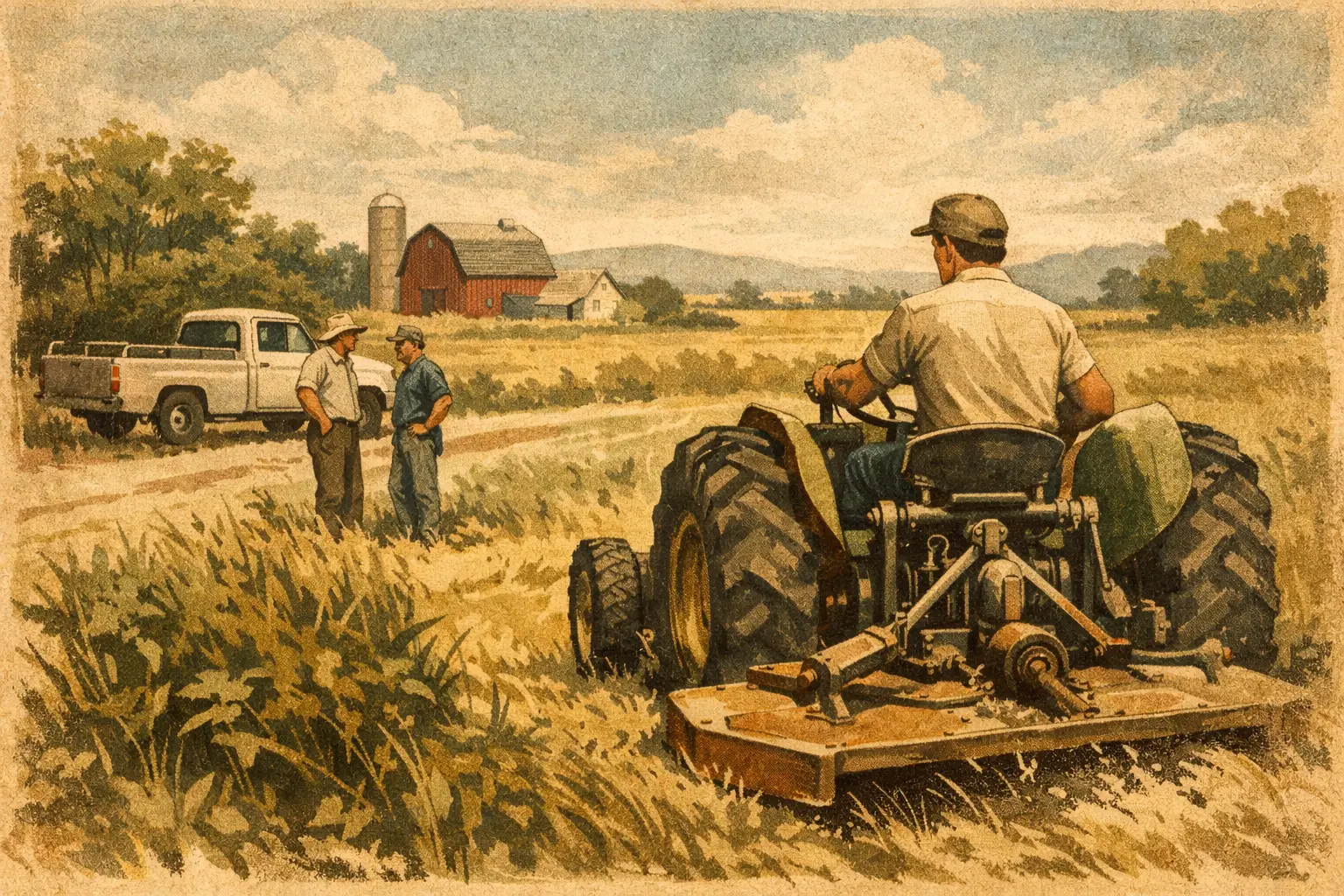
A field can go from manageable to waist-high faster than most property owners expect. When vines, thick grass, weeds, and light brush start taking over, searching for brush hogging services near me is often the quickest way to make the property usable again without buying equipment you may use only once or twice a year.
Brush hogging is practical work, but it is not a one-size-fits-all job. The right worker, equipment, timing, and plan depend on your acreage, terrain, vegetation, and goals for the land. Whether you have a neglected lot in Parkersburg, an overgrown fence line, a rental property that needs attention, or a few open acres outside town, a little preparation helps you get safer, clearer results.
What Brush Hogging Is Good For
A brush hog is a heavy-duty rotary mower, commonly pulled behind a tractor. It is designed for growth that would stop or damage a typical lawn mower: tall grass, field weeds, goldenrod, small saplings, briars, and scattered brush. The result is a cut, more open property, not a polished lawn.
That distinction matters. Brush hogging is a strong choice when you need to reclaim an area, reduce hiding spots for pests, create access for a survey or fence repair, maintain an empty lot, or keep a field from becoming a thicket. It can also make a property look cared for while you decide on a longer-term landscaping plan.
It is usually not the best tool for a finish-ready yard, thick mature trees, stumps, large rocks, construction debris, or vegetation growing tightly around delicate structures. A mower crew may be better for maintained grass, while tree removal or forestry equipment may be needed for larger woody growth. A good local worker will be straightforward about where brush hogging ends and another kind of work begins.
How to Find Brush Hogging Services Near Me
A nearby provider is useful for more than convenience. Local workers understand the steep grades, wet ground, narrow driveways, and seasonal growth common around the Mid-Ohio Valley. They are also more likely to have realistic availability for a one-time clearing job or recurring field maintenance.
Start by describing the work clearly instead of simply asking for a price. A post that says, “Need a field mowed,” leaves too much to guess. Say where the property is, approximately how much area needs cut, how tall or dense the growth is, whether the terrain is level or sloped, and when you would like the work done. Photos and a short video can prevent surprises, especially when brush is hiding the ground.
With Lawns, residents can post the job, set a preferred price, and connect directly with nearby independent workers through in-app chat. That gives you room to ask practical questions, compare responses, arrange timing, and make sure the worker understands the property before anyone heads out with a tractor.
The lowest quote is not always the best value. A worker with the right machine and a clear plan may charge more than someone treating the job like ordinary mowing. In return, you may avoid a half-finished field, damaged equipment, or a rescheduled job after the worker sees how thick the brush really is.
Questions worth asking before you book
Ask what equipment the worker plans to use and whether it is suited to your property. A compact tractor may be ideal for a small, open lot, while a larger tractor or skid steer may be needed for dense brush or more acreage. If your access road is narrow, wet, or crossed by a small bridge, mention that early.
You should also ask whether the quote includes travel, loading and unloading, cutting around obstacles, and a return visit if the job requires more than one pass. Confirm what will happen with clippings and knocked-down brush. In many field jobs, material is left where it falls. That is normal, but it is better to agree on it beforehand than expect removal that was never included.
Finally, talk about the finish you want. Do you need the area cut once so you can walk it? Are you preparing for a fence, garden, or sale? Or do you want recurring cuts to keep regrowth under control? Your answer affects the equipment, schedule, and price.
What Affects Brush Hogging Cost
Brush hogging is commonly priced by the hour, by acreage, or as a flat job rate. The right approach depends on how predictable the work is. A smooth, open field can be estimated by acreage with confidence. A wooded-edge lot full of hidden obstacles is often better priced by time because it requires slower, more careful work.
The biggest cost factor is density. Tall grass is faster to cut than thick briars mixed with volunteer trees. Terrain matters too. A flat, dry field is easier and safer than a hillside, creek bank, or muddy low spot. Access can make a major difference: a worker who can pull in, unload, and begin cutting has a simpler job than one who must navigate gates, parked vehicles, or a long rough lane.
Hidden hazards are another reason estimates can change. Tires, wire, old fencing, cinder blocks, metal posts, and large rocks can damage a brush hog or become dangerous projectiles. If you know there is debris on the property, say so. Honest details help a worker price fairly and plan safely.
For a first-time clearing, expect the work to take longer than future maintenance cuts. Once an area has been opened up, cutting it once or twice a season is usually quicker and easier. That is why regular maintenance can be a better long-term choice for vacant lots, field edges, and acreage near homes.
Prepare the Property Before the Worker Arrives
A few minutes of preparation can save real time on the job. Walk the area if it is safe to do so and point out hazards that could be concealed by growth. Mark utility boxes, septic lids, drain fields, irrigation heads, boundary markers, young trees you want saved, and any object the worker needs to avoid.
Move vehicles, trailers, lawn furniture, toys, and loose materials out of the work zone. Secure pets indoors or well away from the area. Brush hogging throws debris, makes significant noise, and requires room to maneuver. Keep children and visitors away until the equipment is shut down and the worker says the area is safe.
If access involves a locked gate, provide a plan for entry. If you will not be home, communicate where to park, which sections to cut, and which areas are off limits. A simple map or labeled photos can be especially helpful on a larger property.
Do not try to clear unknown debris with a weed trimmer or by hand just to make the property look better before an estimate. If the growth is heavy, you could encounter sharp metal, snakes, uneven ground, or holes. Let the worker know what you can see and let them assess the rest safely.
Timing Matters More Than People Think
The best time to brush hog depends on what is growing and why you are cutting it. A midseason cut can keep a field accessible and reduce the spread of tall weeds before they go to seed. A late-season cut may help tidy a property before winter and make spring work easier.
Wet conditions can change everything. Heavy equipment on saturated ground can leave ruts, compact soil, or get stuck. On steep slopes, wet grass also creates a safety concern. It may be frustrating to postpone a job after rain, but a responsible worker will wait when conditions make the work unsafe or likely to damage the land.
If you are trying to control invasive plants or protect a specific habitat, timing gets more specific. Cutting at the wrong point in a plant’s growth cycle can encourage regrowth, and mowing during nesting periods may not be appropriate in some areas. Tell the worker your goal so you can decide whether immediate cutting or a planned schedule makes more sense.
Know What Good Work Looks Like
A successful brush hogging job leaves the agreed area visibly cut, accessible, and free of obvious uncut strips where equipment could reasonably reach. It does not mean every stem disappears or that the ground looks like a freshly mowed lawn. Coarse clippings, short stalks, and uneven-looking terrain are normal after clearing heavy growth.
Before payment, take a walk around the area from a safe distance or review photos if you could not be present. Confirm that the worker completed the sections you discussed, avoided marked features, and left access points as agreed. If something needs attention, raise it promptly and respectfully. Clear communication is how local jobs stay fair for both the homeowner and the person doing the work.
A freshly brush-hogged property creates breathing room. It gives you a safer view of what is on the land, makes the next project easier to plan, and helps your home or lot feel looked after. When you hire a capable neighbor for the job, you are not just clearing brush – you are keeping useful work and local dollars close to home.

