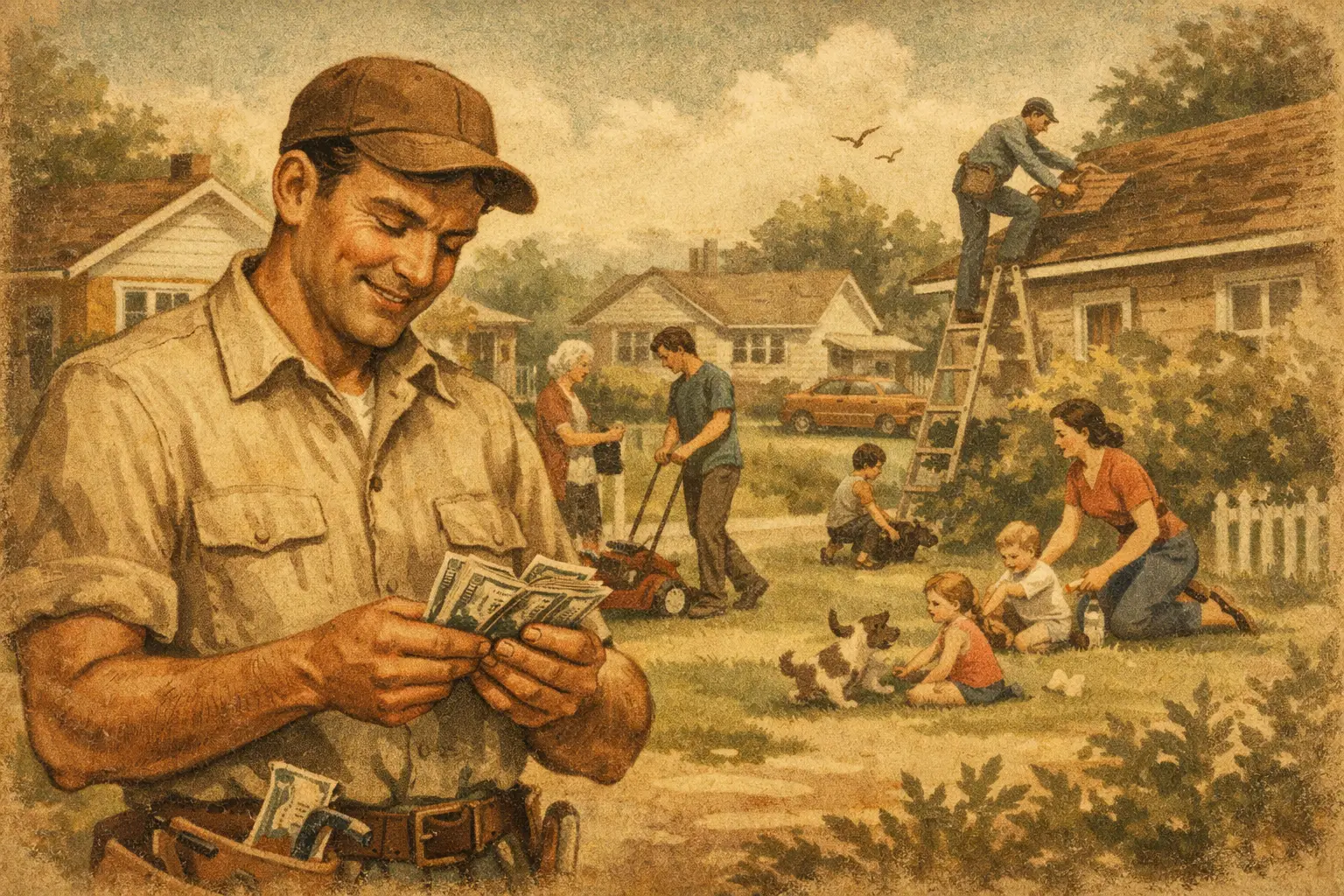
A Saturday spent mowing an overgrown yard, hauling a few old boxes, or walking a neighbor’s dog can do more than check something off someone else’s list. It can put real money in your pocket. When you get paid for odd jobs, you are turning practical skills, free time, and a willingness to help into flexible local income.
For people across the Mid-Ohio Valley, odd jobs are not about chasing a faraway gig. They are about helping a homeowner before family arrives, making a property safer after a storm, or giving an older neighbor a hand with work that has become too difficult. Done well, that kind of work builds a reputation right where you live.
What Counts as an Odd Job?
An odd job is usually a task that is useful, straightforward, and too small for a traditional contractor to take on – or too urgent for a homeowner to keep putting off. The best jobs often fall into work people need repeatedly: mowing, trimming, leaf cleanup, snow shoveling, dog walking, house cleaning, pressure washing, gutter cleaning, car detailing, or basic yard care.
One-time projects can be a good fit, too. Think junk removal, moving a few heavy items, hauling brush, cleaning out a garage, putting together furniture, watering plants while someone is away, or helping prepare a rental property between tenants.
The key is to be honest about your skill level. You do not need to be an expert at everything. In fact, being known as the person who does a few services reliably is usually better than saying yes to work you are not equipped, insured, or qualified to handle. Electrical work, major plumbing repairs, structural projects, tree removal near power lines, and other higher-risk jobs may require a licensed professional.
Start With Work You Can Do Well
Before looking for customers, take stock of what you already have. A dependable mower, trimmer, rake, truck, pressure washer, cleaning supplies, or even a reliable pair of walking shoes can be the beginning of a service offer. Your time matters, too. Someone who is available on weekday mornings may be especially helpful to retirees, busy parents, or property owners who need work done before the weekend.
Choose services that make sense for your experience and schedule. Lawn mowing can create recurring income, but it requires consistency through the growing season. Hauling may pay more per job, but it can mean fuel costs, disposal fees, and heavier physical work. Dog walking may have lower equipment costs, while asking you to be dependable in all kinds of weather.
A clear starting point might be offering two or three related services. For example, lawn mowing, trimming, and yard cleanup naturally go together. So do house cleaning, window cleaning, and basic organizing. This makes it easier for customers to understand what you do and easier for you to plan your day.
How to Get Paid for Odd Jobs Without Guessing at Price
Pricing is where many new workers either sell themselves short or accidentally quote more than a job can support. Start with the full picture: your labor, travel time, fuel, supplies, equipment wear, cleanup, and any disposal costs. A 30-minute job that requires an hour of driving each way is not really a 30-minute job.
For smaller tasks, an hourly rate with a minimum can protect your time. For familiar work such as mowing a small yard, cleaning a standard room, or walking a dog, a flat price is often easier for both you and the customer. Flat pricing works best when you can clearly see the scope before agreeing to it.
Ask a few practical questions before you quote. How large is the yard? Is grass tall or wet? Are there gates, steep slopes, pet waste, or obstacles? Does the customer want bagging, edging, or debris hauled away? For cleaning, ask about the number of rooms, the condition of the space, and whether supplies are provided.
It is okay to say that the final price depends on seeing the job. That is not being difficult. It is being fair to both sides. If a job changes after you arrive, explain the difference before doing additional work. Clear expectations prevent most disputes.
Build Trust Before You Arrive
People are inviting you onto their property, sometimes when they are not home. Skill gets attention, but trust earns repeat work. Be specific in your job response, confirm when you can arrive, and communicate quickly if weather, traffic, or another job affects your timing.
A short message can make a strong impression: explain what you can do, what equipment you will bring, how long you expect it to take, and what the agreed price includes. If you need access to a gate, parking instructions, or details about a pet, ask before the day of the job.
Then show up prepared. Wear clean work clothes, bring the tools you said you would bring, and treat the property with care. Close gates behind you. Keep an eye out for children, pets, and vehicles. Take before-and-after photos when appropriate, especially for yard cleanup, hauling, pressure washing, or any work where the result is easy to document.
Reviews matter because they give the next customer a reason to feel comfortable hiring you. A completed job, friendly communication, and a tidy finish are more likely to earn a positive review than a flashy sales pitch ever will.
Use a Local Marketplace to Keep Work Nearby
Finding jobs through friends and family can be a good first step, but it can become hard to manage when messages are scattered across texts and social media. A local marketplace gives you one place to find nearby requests, discuss the details, agree on a price, and keep a record of the job.
With Lawns, local workers can respond to everyday home, yard, pet, cleaning, and light-maintenance jobs posted by people in their community. Customers can share the location, timing, and preferred price, while workers can ask questions and decide whether the work is a good fit. That direct conversation matters because not every job is the same, even when the service name is.
A neighborhood-based approach also cuts down on wasted driving. A few jobs close together can make a part-time workday worthwhile. More importantly, it keeps money circulating among the people and businesses that make the Mid-Ohio Valley home.
Protect Your Time, Your Earnings, and Your Safety
Flexible work should not mean loose boundaries. Agree on the scope, price, date, and payment process before you start. For larger projects, break the work into clear stages so everyone understands what will be completed at each point.
Use secure, documented payment whenever possible. It is much easier to focus on doing good work when there is a clear record of what was agreed upon and when payment is released. Avoid starting a job when a customer refuses to discuss price, changes the request repeatedly, or asks you to take on work that feels unsafe.
Personal safety deserves the same attention as job quality. Let someone know where you will be when meeting a new customer. Trust your instincts if a location or request feels off. Wear protective gear for the task, whether that means gloves, eye protection, boots, hearing protection, or a mask. Never use equipment you do not understand, and never take on hazardous work just because the pay sounds tempting.
You should also plan for the physical side of odd jobs. Lift with care, pace yourself in summer heat, drink water, and leave enough time between demanding jobs. A full schedule is only valuable if you can complete each job safely and do it well.
Turn One Job Into Steady Local Work
The most dependable odd-job income often comes from repeat customers. After you mow a lawn well, ask whether the customer would like a regular schedule. After a yard cleanup, mention that you also handle seasonal leaf removal or snow clearing. The goal is not to pressure anyone. It is to make it easy for them to remember who can help next time.
Reliability is a real service. Returning messages, arriving when promised, and leaving a property looking better than you found it can set you apart quickly. Many customers are not searching for the cheapest possible option. They are looking for someone local who follows through.
Keep simple records of completed jobs, expenses, mileage, and customer preferences. A note that a customer prefers mowing on Thursdays, wants clippings bagged, or has a dog in the backyard helps you provide better service the next time. It also helps you see which types of work are truly worth your time.
Odd jobs can stay a useful weekend side income, grow into a regular part-time schedule, or become the first building block of a local service business. The right path depends on your goals, equipment, availability, and the work your neighbors need most.
A clean yard, a safer walkway, a freshly washed window, or a happy dog at the end of a walk may seem like small things. For the person who needed help, they can make the whole day easier. Do the work with care, charge fairly, and you will be building more than earnings – you will be building a name your neighbors can count on.

