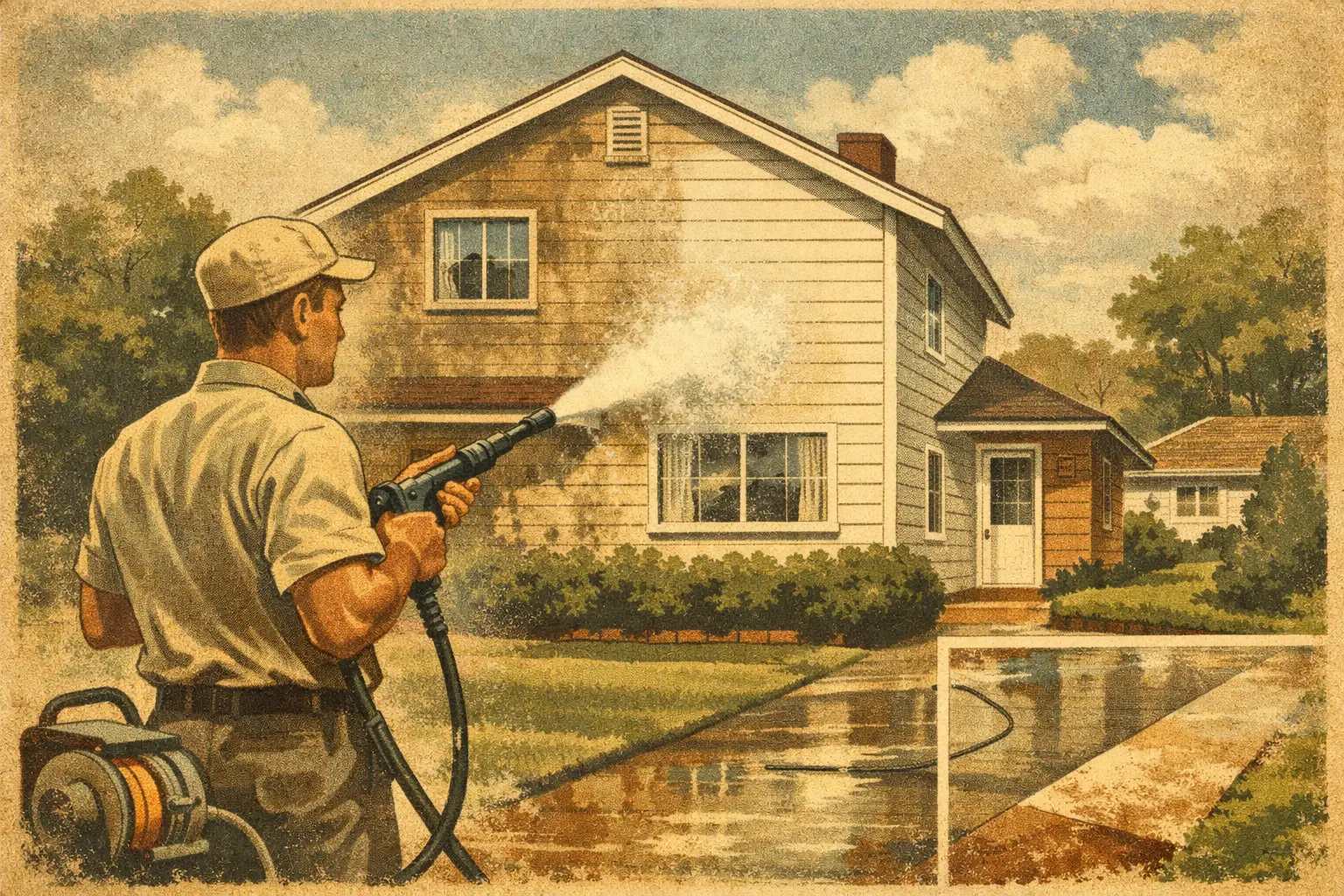
That green film on the siding, the black streaks across the driveway, and the slippery patch on the back steps do more than make a home look neglected. They can create real maintenance and safety concerns. Residential power washing is one of the quickest ways to refresh exterior surfaces, but the best results come from matching the method to the material instead of blasting every surface with maximum pressure.
For homeowners and renters in the Mid-Ohio Valley, this matters. Our changing seasons bring pollen, mud, rain, leaf stains, mildew, and winter grime. A thoughtful cleaning can make a property feel cared for again without turning a weekend into an equipment rental project.
What Residential Power Washing Can Clean
Power washing uses pressurized water to lift away dirt, organic growth, stains, and loose surface buildup. People often use “power washing” and “pressure washing” interchangeably. Technically, power washing may involve heated water, while pressure washing relies on water pressure alone. For most household jobs, what matters most is the pressure level, nozzle choice, cleaning solution, and the person using the equipment.
Driveways, sidewalks, patios, steps, retaining walls, and some fences are common candidates for stronger cleaning. These hard surfaces collect tire marks, mud, algae, and grime that a garden hose will not touch.
Siding, decks, painted trim, outdoor furniture, screens, and roofs call for a gentler approach. In many cases, a low-pressure soft wash with the right cleaning solution is safer and more effective than high pressure. The goal is to remove the buildup, not strip paint, force water behind siding, or scar the surface.
A clean exterior can also help you spot issues that dirt was hiding, such as cracked caulk, loose boards, worn sealant, or damaged concrete. That is useful information, but it also means power washing should not be treated as a cure for every exterior problem. If a surface is failing, cleaning it may reveal the damage rather than fix it.
Why Timing Matters in the Mid-Ohio Valley
There is no single perfect month for every home, but spring and early fall are often practical choices. Spring cleaning clears away winter residue and pollen before outdoor gatherings begin. Fall cleaning removes summer mildew and leaf stains before colder weather settles in.
A north-facing wall or shaded walkway may need attention more often because it stays damp longer. Homes near trees can collect more pollen, sap, and leaf debris. A busy driveway may show stains sooner than a lightly used one. Rather than following a rigid calendar, look at the surfaces around your property and clean when buildup becomes noticeable or slippery.
Avoid scheduling exterior washing when temperatures are near freezing, during heavy rain, or when a strong storm is expected. Cleaning solutions need time to work, and water needs time to drain and dry. If you are washing a deck or fence before staining, allow enough drying time for the wood and follow the product instructions carefully.
Not Every Surface Wants High Pressure
The biggest mistake in residential power washing is assuming more pressure means a better clean. Too much force can etch concrete, gouge wood, strip paint, damage window seals, shred screens, and leave visible lines across siding. Even durable materials can be harmed by the wrong nozzle held too close.
Concrete is a good example. A driveway can usually handle more pressure than vinyl siding, but an inexperienced pass can leave “zebra stripes” that are hard to correct. Wood is even less forgiving. A deck may look cleaner right away after aggressive washing, yet raised wood fibers and uneven marks can create more prep work before sealing or staining.
Roof cleaning deserves extra caution. High-pressure washing can damage shingles and remove protective granules. Dark roof streaks are often caused by algae, and they usually need a roof-safe, low-pressure treatment rather than a pressure washer.
If you are unsure what material you have, or whether a stain is surface-level versus a sign of damage, ask before work begins. A good local worker should be willing to discuss the surface, the planned method, and what results are realistic.
The right question is not “Can it be washed?”
A better question is, “What is the safest way to clean it?” Sometimes the answer is a low-pressure rinse. Sometimes it is a targeted cleaner and a brush. Sometimes it is postponing the job until a repair is made. That kind of judgment protects your property and helps avoid paying twice for a job.
Preparing for a Power Washing Job
A little preparation makes the work safer and keeps the job focused. Move vehicles, outdoor furniture, toys, planters, and doormats away from the work area. Close windows and doors, and point out any loose siding, damaged trim, fragile decorations, or electrical outlets that need extra care.
Pets should be kept inside or away from the work zone. The equipment is loud, hoses can create trip hazards, and cleaning solutions should not be left where animals can reach them. If plants border the area being cleaned, mention them. Depending on the method, they may need to be covered, rinsed before and after, or avoided altogether.
It also helps to be clear about the job’s boundaries. Do you want the front walk and porch only, or the driveway, patio, siding, and fence as well? Are you mainly concerned about mildew, oil spots, or general curb appeal? A few photos and a straightforward description can help a worker give a more accurate response.
What Affects the Price
Residential power washing prices depend on more than square footage. Surface type, access, stain severity, water availability, prep work, and the cleaning method all affect the time and effort involved. A flat concrete patio with an outdoor spigot is a very different job from second-story siding around landscaping and uneven ground.
Be wary of an unrealistically low quote that does not define what is included. It may leave out prep, cleaning solution, stain treatment, rinsing, or cleanup. On the other hand, the highest price is not automatically the best choice. Look for a worker who communicates clearly, has relevant reviews, and explains the approach without making promises that do not fit the surface.
If you use a local marketplace such as Lawns, you can post the location, timing, photos, and preferred price, then discuss the details directly with nearby workers before choosing who to hire. That gives you room to compare responses while keeping the work and the dollars close to home.
How to Know the Job Was Done Well
A good result should look even from a normal viewing distance, not merely bright in a few freshly washed spots. Walk the area after it dries. Check that steps and walkways are free of slippery growth, that siding does not have streaks or damaged sections, and that surrounding areas were rinsed and left tidy.
Some stains may not disappear completely. Rust, deeply embedded oil, old paint, hard-water deposits, and permanent discoloration can require specialty treatment or may remain visible even after careful cleaning. Honest expectations are part of good service. A responsible worker will tell you when a stain may improve rather than vanish.
For ongoing care, keep gutters clear, trim back plants that hold moisture against the house, and sweep leaves from decks and patios. Those small habits reduce the conditions that let algae and mildew return quickly.
A clean walkway, porch, or driveway can change how a home feels before anyone even reaches the front door. When the job is planned with care and handled by someone who respects the surface, residential power washing is not just a cosmetic reset. It is one practical way to keep a home safer, more welcoming, and ready for the next neighborly visit.

