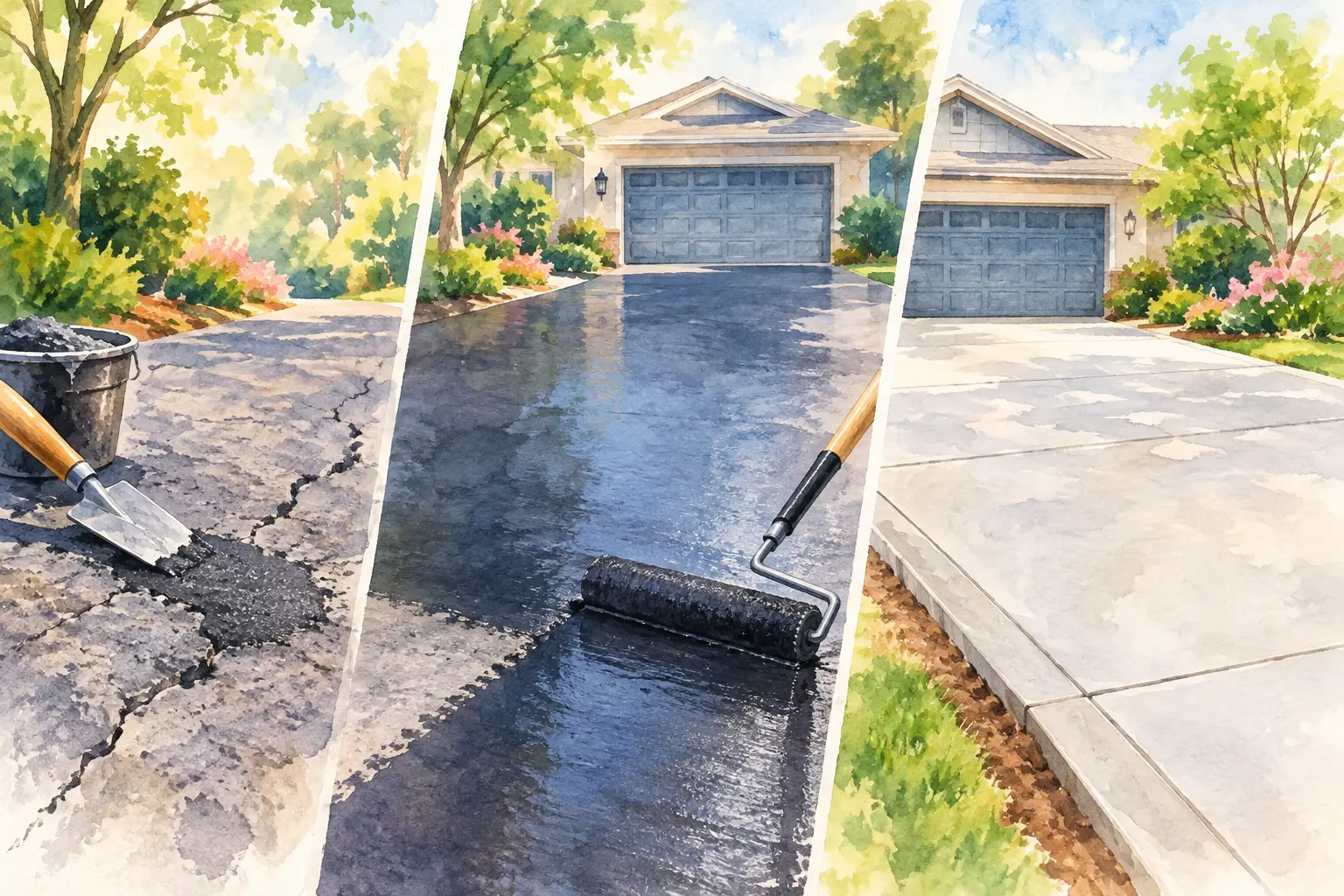
A driveway can look fine from the street and still be one hard winter away from a bigger problem. Small cracks let water underneath the surface, where freezing, thawing, and shifting soil can turn a simple driveway repair into a broken edge, pothole, or uneven place to park.
For homeowners across the Mid-Ohio Valley, the right fix depends less on how old the driveway is and more on what is happening beneath and around it. A little surface wear may only need cleaning and sealing. Deep cracks, standing water, or crumbling asphalt call for a closer look before spending money on a temporary patch.
Start With the Cause, Not the Crack
Cracks are symptoms. Before choosing a filler, walk the driveway after a rain and look for clues. Does water run toward the garage? Does one section dip where vehicles regularly stop? Are tree roots lifting the pavement? Is the edge breaking down because cars pull off the paved area?
Water is usually the main culprit. When it enters a crack, it can soften the base material under asphalt or concrete. In winter, that water freezes and expands. Repeated freeze-thaw cycles widen the opening and push the surface apart. A patch may improve the appearance, but it will not last if runoff is still flowing underneath it.
Driveway materials matter, too. Asphalt is flexible and often develops cracks as it ages and oxidizes. Concrete is harder but can crack when the ground moves or control joints fail. Gravel driveways do not crack, but they can rut, wash out, and lose their shape. Each material needs a different approach.
When a Simple Driveway Repair Makes Sense
Minor damage is often worth fixing early. Addressing it while the surface is still sound can keep water out and extend the life of the driveway without the cost of a full replacement.
For asphalt, narrow hairline cracks can usually be cleaned and filled with a crack sealer. Wider cracks may need a more substantial asphalt patch material. The key is preparation: remove loose debris, vegetation, and dirt first, then allow the area to dry fully. Applying filler to a damp, dirty crack often leads to an early failure.
Small potholes can also be patched if the surrounding asphalt is firm. Loose material needs to be removed, the hole should be squared up as much as practical, and patch material must be compacted well. A patch that sits loose on top of a soft base will sink again under the weight of a vehicle.
Concrete cracks are a little more complicated. A narrow, stable crack can be cleaned and filled with a flexible concrete crack sealant. If one side of the crack is higher than the other, though, the slab may be moving. Filling that gap can help keep water out, but it will not correct a trip hazard or a significant height difference.
Gravel repair generally means reshaping rather than filling. Ruts should be loosened, filled with compatible gravel, and graded so water sheds away from the driveway. Simply dumping fresh stone into wheel tracks can make the drive uneven and leave the drainage issue untouched.
Sealcoating Protects Asphalt, But It Does Not Fix Everything
Sealcoating can make an aging asphalt driveway look cleaner and more uniform. It also provides a protective layer against sun, moisture, oil drips, and everyday wear. For a driveway with minor fading and small, repaired cracks, it can be a smart maintenance step.
But sealcoat is not a cure for failing pavement. It will not fill deep cracks, repair potholes, or stabilize soft areas. Putting a dark new coat over widespread damage may make the driveway look better for a season while the structure underneath continues to fail.
If sealcoating is appropriate, timing matters. The surface needs to be clean and dry, and the forecast should allow enough time for it to cure. Avoid sealing brand-new asphalt too soon, since fresh asphalt needs time to harden and release oils. Local conditions and the product instructions should guide the schedule.
Signs You May Need Resurfacing or Replacement
Some driveway problems are beyond a straightforward patch. Resurfacing, also called an overlay for asphalt, adds a new layer over an existing driveway. It can be a good middle ground when the base is solid but the top layer has widespread surface cracking or wear.
Replacement is usually the better choice when the base has failed. Watch for large alligator-style cracking, repeated potholes in the same spots, deep depressions, crumbling edges throughout the driveway, or water pooling after every rain. If a driveway has been patched several times and keeps breaking apart, the issue is likely below the surface.
A contractor may need to remove damaged material, rebuild and compact the base, correct the slope, and install new asphalt, concrete, or gravel. That is a larger investment, but it can prevent the frustrating cycle of paying for patches that do not hold.
There is also a safety question. Uneven concrete, loose gravel near walkways, and deep holes where people step out of cars can create a fall risk. If older relatives, children, delivery drivers, or guests regularly use the area, prioritize hazards even if the driveway is still usable for vehicles.
Do Not Ignore Drainage Around the Driveway
A driveway should direct water away from the garage, foundation, and neighboring property. Even a well-made surface can deteriorate quickly when gutters dump water onto it or when the surrounding yard slopes toward it.
Start with the easy checks. Clean gutters and downspouts, then make sure downspout extensions carry water far enough away to avoid washing out the driveway edge. Clear leaves and soil from drainage channels. If landscaping or gravel has built up along the sides, restore a path for water to escape instead of trapping it against the pavement.
For bigger drainage concerns, such as water entering a garage or a driveway that sits below the surrounding grade, it is wise to get a professional assessment. The solution may involve regrading, a trench drain, a culvert, or a different driveway profile. Those fixes are more involved, but they address the reason the pavement is failing.
A Practical Plan Before You Hire Help
Take a few photos in good light, including close-ups and a wider view that shows the driveway’s slope and edges. Measure the damaged area roughly, note whether the driveway is asphalt, concrete, or gravel, and pay attention to when the problem gets worse. Photos after rain can be especially useful.
When you talk with a local worker or contractor, explain whether you want a quick repair, a longer-lasting improvement, or an opinion on replacement. Ask what preparation is included, how they will handle drainage, what material they plan to use, and how long the area needs to stay clear of vehicles. A low price can be a good value, but only if it includes the base work and cleanup the job actually needs.
For smaller outdoor tasks, it can help to post clear details and let nearby workers respond. Lawns makes it easier to describe the work, discuss timing and price directly, and hire local help for related tasks such as pressure washing, yard cleanup, or hauling away broken material. For structural driveway work, look for someone with the specific equipment and experience the repair requires.
Keep Small Problems Small
A driveway does not need to be perfect to be worth maintaining. Sweep away debris, trim back grass that holds moisture at the edges, clean oil spots promptly, and inspect cracks each spring and fall. If you catch a small opening before water gets under the surface, the repair is usually simpler, less disruptive, and easier on the household budget.
The best next step is often a careful look after the next rain. Water will show you where your driveway needs attention, and fixing that path early can help protect both the pavement and the home it leads to.

