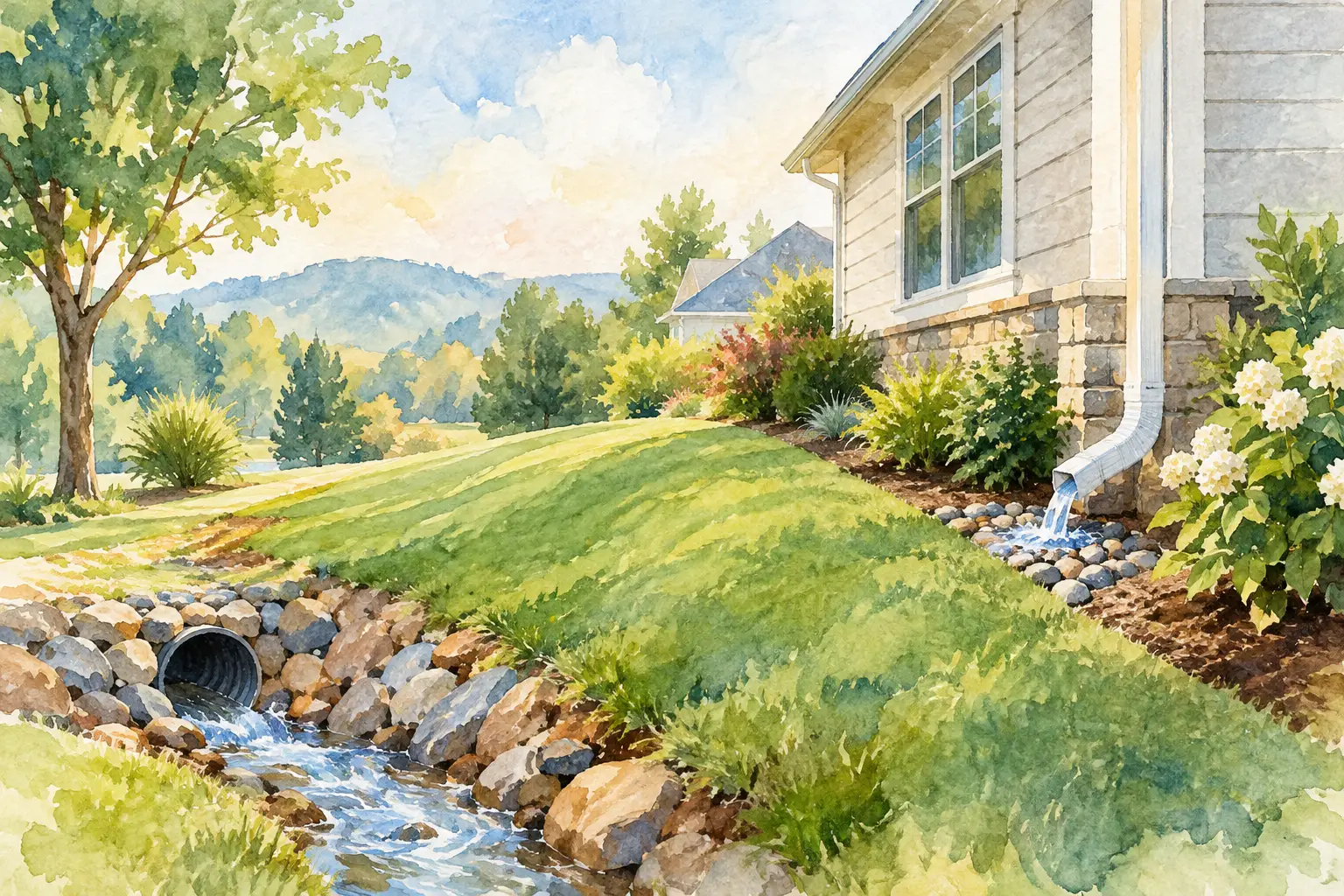
A hard rain can reveal more about a property than a sunny afternoon ever will. Water that gathers beside the foundation, runs across a walkway, or turns a backyard into a muddy mess is not just inconvenient. Over time, it can affect your home, your lawn, and even the neighbors downhill.
Property sloping for water drainage is the work of shaping the ground so rainwater moves away from buildings and through the yard in a safe, sensible direction. It is one of those jobs that can look simple from the street but requires careful planning before a shovel ever hits the ground.
Why the slope around your home matters
The ground around a home should not hold water against the foundation. When soil is flat, settles over time, or slopes toward the house, water can pool where it does the most harm. That moisture may contribute to damp basements, crawl-space issues, erosion, mulch washing away, and slippery patches near doors or driveways.
In the Mid-Ohio Valley, our weather makes drainage especially worth paying attention to. Heavy spring rain, summer storms, falling leaves, and winter freeze-thaw cycles can all change how water moves across a property. A yard that handled rain well last year may develop a low spot after soil settles or a downspout extension comes loose.
Good drainage also protects the parts of a yard people use every day. It helps preserve garden beds, keeps grass from being worn into mud, and makes it easier for kids, pets, guests, and delivery drivers to move around safely. A well-graded property is not about making every inch of land perfectly level. It is about giving water a clear place to go.
The basic grade to aim for
A common starting guideline is to have the soil drop about 6 inches over the first 10 feet away from the foundation. That gentle slope is often enough to encourage water to flow away without creating a steep, awkward yard.
Still, that number is not a universal rule for every lot. A small city yard, a hillside property, a home with a retaining wall, or a property close to a neighboring house may need a different approach. Existing driveways, sidewalks, utility lines, landscaping, and local drainage patterns all affect what will work.
The goal is not to send water somewhere else without thinking. Water should move toward an appropriate drainage area, such as a swale, a designated low point, or a properly planned drainage system. It should not be redirected toward a neighbor’s foundation, driveway, or garage.
Start with a rainy-day walkaround
You can learn a lot without specialized equipment. During a steady rain, or shortly after one, walk around the outside of your home and look for standing water, muddy channels, overflowing gutters, and water marks along the foundation.
Pay close attention to the corners of the house, where downspouts empty, and where patios or sidewalks meet the lawn. Notice whether water is actually leaving the area or simply disappearing into mulch and reappearing closer to the house. Photos and short videos can be helpful when explaining the problem to a local worker later.
If the yard is dry, a long board and level can provide a rough sense of the grade. For larger drainage concerns, a laser level or professional site assessment gives a more reliable picture. Guesswork can lead to moving a lot of soil without fixing the underlying issue.
Common signs your property needs regrading
One puddle after an unusually strong storm does not always mean the yard needs major work. Persistent patterns are what matter. If water remains near the foundation for a day or more, the issue deserves attention.
Other signs include basement dampness, soil pulled away from the house, mulch repeatedly washing out, bare channels in the lawn, and grass that stays soggy while the rest of the yard dries. Cracks in concrete or settling around a porch can also be worth checking, although they may have causes beyond drainage alone.
Downspouts are often part of the problem. A roof collects a surprising amount of water, and a downspout that releases it directly beside the house can overwhelm an otherwise decent slope. Extending the discharge point farther from the foundation may help, but it still needs to release water where it can travel safely.
Choose the right fix for the yard you have
For a minor low spot near the house, adding clean fill soil and rebuilding the grade may be enough. Soil should be placed and compacted in layers rather than piled loosely against the foundation. Once the shape is right, topsoil, seed, sod, mulch, or ground cover can restore the finished look.
For broader surface-water issues, a shallow swale may work better. A swale is a gently sloped channel that guides water across the yard without looking like a ditch. It can blend into a lawn or landscape bed when designed well, but it needs a planned outlet. Water does not solve itself simply because it has been moved a few feet.
Some properties need more than grading. French drains, catch basins, buried downspout extensions, retaining walls, or drainage piping can be useful when water is trapped by hardscaping or the natural shape of the lot. These solutions usually cost more and may require permits, utility locating, or professional design. They are worthwhile when the problem is serious, but they are not the first answer to every wet patch.
Avoid the fixes that create bigger problems
One common mistake is adding mulch or decorative stone to cover a low area. It may make the spot look better temporarily, but it does not change where water goes. In some cases, piling soil or mulch too high against siding can hold moisture near the home and create pest concerns.
Another mistake is grading too aggressively. A steep slope may shed water quickly, but it can wash out during hard rain, make mowing difficult, and create an uneven yard that is hard to enjoy. Gentle, intentional changes are usually more durable than a dramatic drop-off.
It is also wise to call 811 before digging for drainage lines, posts, or deeper grading work. Underground utilities are not always where homeowners expect them to be. If a project affects a public drainage area, crosses a property line, or involves major changes near a road, check applicable local requirements before work begins.
When to bring in local help
Small drainage improvements can be a good weekend project for someone with time, tools, and confidence. But moving soil is physical work, and a yard can require more material than it first appears. A single cubic yard of soil is heavy, and getting it placed evenly takes more than a wheelbarrow and good intentions.
Consider hiring help when the issue involves foundation moisture, a steep yard, standing water across a large area, buried drainage, or erosion after every storm. A local worker can help with yard cleanup, soil moving, downspout extensions, seeding, and finishing work. For drainage designs tied to structural concerns or complicated runoff, a qualified landscaping, drainage, or foundation professional may be the better call.
If you use Lawns to post a job, be specific about what you see: where water collects, when it happens, whether the problem is new, and what outcome you want. Clear photos, approximate measurements, and a note about access to the yard can help nearby workers understand whether the job is a simple grading project or one that needs a specialist.
Keep the grade working over time
Drainage is not always a one-and-done project. Soil settles, roots grow, landscaping changes, and storms can reshape a yard a little at a time. Check the ground around your foundation each spring and after major weather events.
Keep gutters clear, make sure downspouts stay connected, and replace washed-out soil before a small low spot becomes a larger problem. When adding a garden bed, patio, shed, or play area, think about water flow before the project starts rather than after the first hard rain.
A dry foundation and usable yard do not happen by accident. A little attention to the ground beneath your feet can keep rainwater moving where it belongs and help your home stay ready for whatever the next Ohio Valley storm brings.

