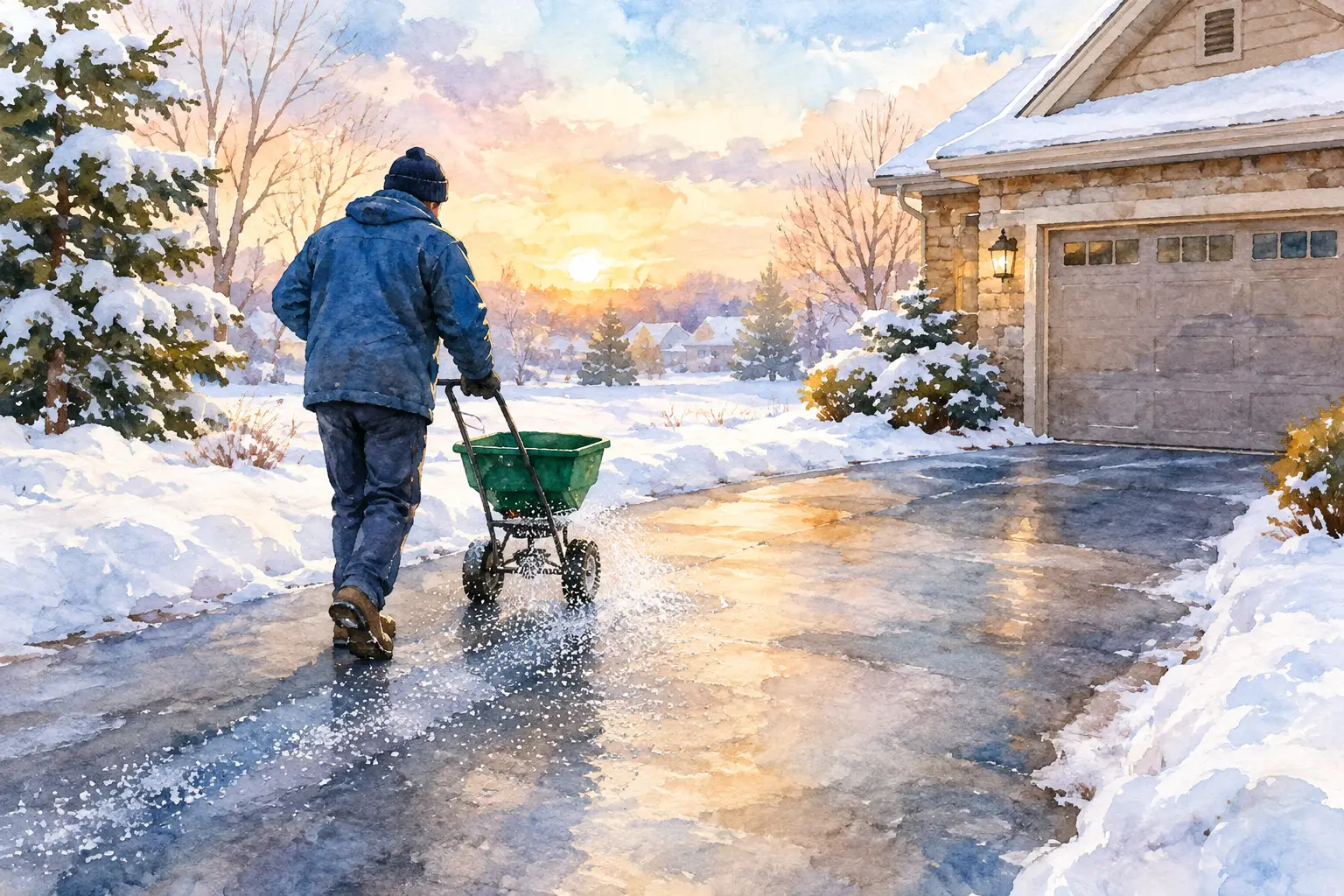
A driveway can look clear and still be dangerously slick. Black ice often forms overnight, especially where melting snow refreezes near shaded garages, parked cars, steps, and sidewalks. When you request driveway salting service before or after a storm, you are giving a local worker the information needed to help reduce those slippery spots before someone heads out the door.
For many Mid-Ohio Valley households, salting is less about making winter disappear and more about keeping everyday routines moving. You may need to get children to school, make an early shift, welcome a caregiver, receive a delivery, or simply walk the dog without worrying about a fall. A timely request can make the property easier and safer to use when the temperature drops.
When to Request Driveway Salting Service
The best time to arrange salting depends on the kind of weather coming, not just whether snow is in the forecast. Light snow, sleet, freezing rain, and a daytime thaw followed by a hard freeze all create different problems. A driveway that was plowed clean may still need treatment if moisture is likely to refreeze.
Request service ahead of a predicted freeze when you can. Pre-treating a dry or mostly dry surface may help prevent ice from bonding as firmly to the pavement. That can make later shoveling or plowing easier, too. If a storm is already underway, a worker may need to clear packed snow first before salt can reach the ice underneath.
After the storm, pay attention to your property rather than relying only on the main roads. Driveways facing north, areas beneath trees, sloped approaches, and spots that receive runoff from a roof or hill can stay icy much longer than the street. If you notice a glossy surface, puddles beginning to freeze, or tire tracks that look compressed and slick, it is reasonable to post the job sooner rather than later.
Salting is also useful when snow removal is not the main issue. Freezing rain can leave a thin, stubborn glaze with very little accumulation. In that case, a driveway may not need plowing at all, but the walking path from the door to the car, porch steps, and the driveway entrance may need attention right away.
Share the Details That Help a Worker Respond
A clear job post helps nearby workers decide whether they have the right equipment, product, and availability. It also helps you get a more useful response than a vague request for “ice help.” You do not need contractor language. Describe the property the way you would explain it to a neighbor coming over for the first time.
Include the driveway size or the number of vehicles it holds, whether it is flat or steep, and which areas matter most. Mention walkways, porch steps, a detached garage, or a side entrance if you want those treated as well. If a car will be parked in the driveway, say so. A worker can plan around it, but cannot salt the pavement beneath it.
Timing matters just as much as the location. Let workers know whether you need treatment before morning, after a certain weather event, or as soon as possible. If you are concerned about an older family member, a visitor with limited mobility, or an early work departure, say that plainly. It gives the request real context and helps both sides agree on the priority.
Photos can be helpful when there is a steep incline, a long private lane, narrow access, or visible ice buildup. They also make it easier to discuss a fair price before the work begins. On Lawns, homeowners can post the job with their location, preferred timing, and budget, then talk through the details with local workers in the app.
Be Specific About the Areas You Want Treated
A full driveway treatment is not always necessary. If the immediate concern is a slick path from the front door to the vehicle, asking for steps, a walkway, and two tire paths may fit your needs and budget better. On the other hand, a broad driveway or shared access area may call for more complete coverage.
Tell the worker if you would like the entrance from the road included. That spot often gets compressed by vehicles and can become icy after plows push snow toward the driveway. Also mention gates, tight turns, unpaved sections, or low-hanging branches that could affect access.
What Salting Can and Cannot Do
Salt works by lowering water’s freezing point, but it is not an instant cure for every ice condition. It generally performs best when applied at the right time and when temperatures are within the product’s effective range. Very cold weather can slow its action, while thick, packed ice may need physical removal along with treatment.
That is why expectations matter. A worker may recommend clearing loose snow first, applying a de-icer, and allowing time for the product to work. If freezing rain continues for hours, a single application may not keep every surface clear. In some cases, a follow-up visit is the practical choice.
There are trade-offs with every de-icing approach. Traditional rock salt is common and effective in many conditions, but overuse can leave residue, affect nearby plants, and be hard on some surfaces and pets’ paws. Other products may be more suitable for lower temperatures or sensitive areas, though they can cost more. If you have pets, new concrete, decorative stone, landscaping along the drive, or a preference for a particular product, include that in your request.
No service can eliminate every winter risk. Continue to use care around wet spots, shaded pavement, and stairs, especially after sunset. Good footwear, careful walking, and clear communication with visitors still matter.
Plan for More Than One Weather Event
Winter weather often arrives in layers. A quick dusting can turn into sleet, then a freeze, followed by several days of thawing and refreezing. Rather than waiting for a dangerous surface to develop, think about the points when your household needs reliable access most: before work, before a medical appointment, before guests arrive, or before a weekend away.
For recurring trouble spots, save a simple description you can reuse. For example: treat the sloped two-car driveway, front steps, and sidewalk to the mailbox after any refreeze. A familiar set of instructions makes future requests faster and gives local workers a better picture of what the job involves.
It is also worth keeping the driveway as clear as possible between services. Move vehicles when practical, pick up hoses or outdoor items before a storm, and direct downspout drainage away from walking areas if you can. These small steps do not replace treatment, but they can reduce the places where water turns into ice.
Choosing Local Help With Confidence
A salting job can be straightforward, but you still deserve clarity about who is coming to your property, what work is included, and what you will pay. Look for workers with relevant reviews, communicate through the app, and agree on the areas to be treated before the job starts. If conditions change, such as a storm becoming heavier than expected, talk through the updated scope before additional work is done.
Local help has a practical advantage during winter weather: nearby workers understand the hills, shaded streets, and fast-changing conditions around Parkersburg and across the Mid-Ohio Valley. Hiring within your community can also keep more winter work and household spending close to home.
When the forecast calls for ice, a clear request made early can spare you the last-minute scramble. Post the driveway, steps, or walkway that needs attention, explain what safe access looks like for your household, and let a capable neighbor help you meet winter weather with a little more confidence.

