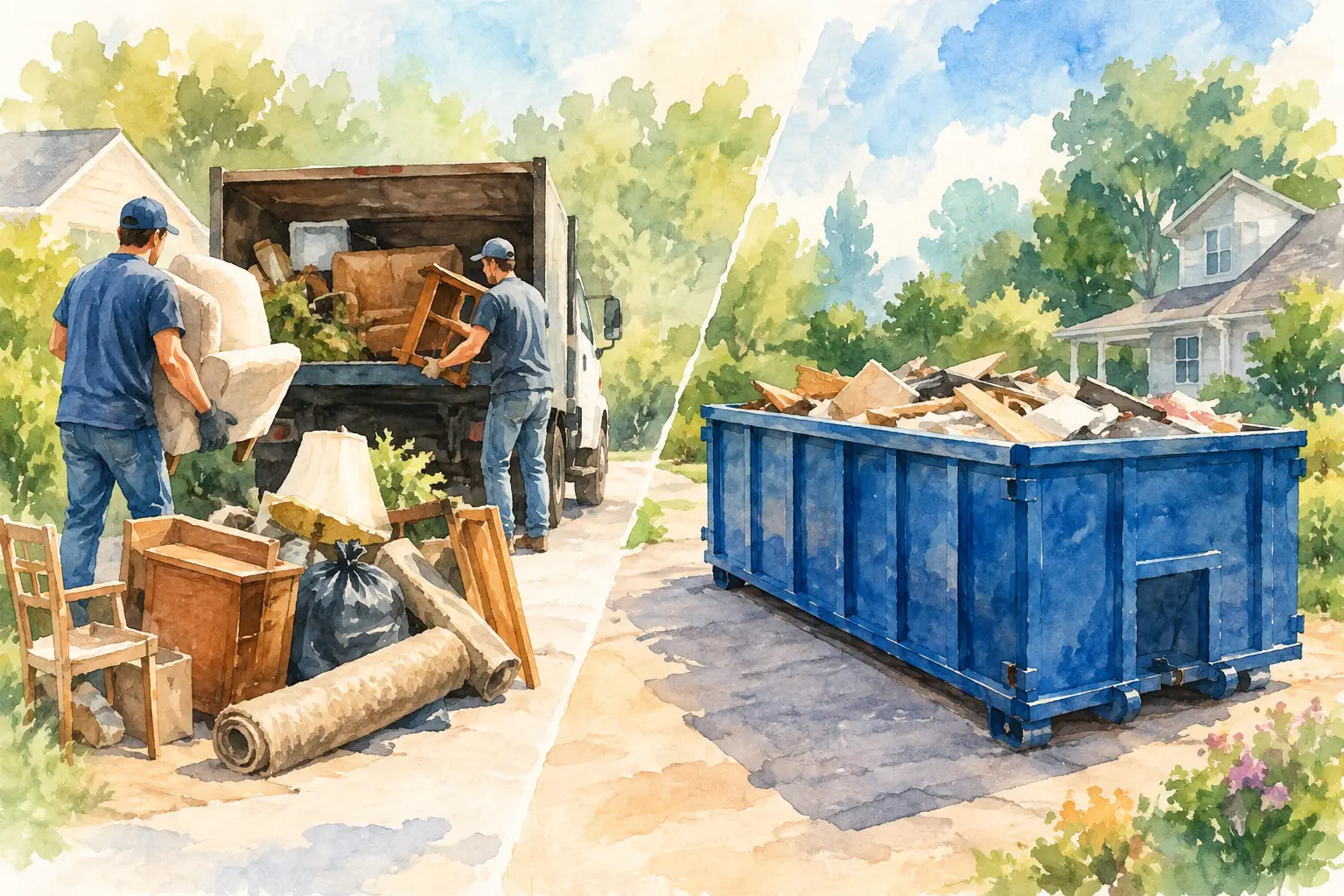
A basement can go from “we may need this someday” to a full Saturday of sorting faster than most people expect. When the bags, boxes, old furniture, and broken appliances start piling up, the choice often comes down to junk removal versus dumpster rental. Both can get the mess gone. The better option depends on how much you have, how much lifting you can do, and whether your cleanup will take an afternoon or several days.
For many Mid-Ohio Valley households, the practical question is not just, “What costs less?” It is, “What lets me finish this job safely, without turning the driveway into a weeklong project?”
How junk removal works
With junk removal, a local worker or crew comes to your home, loads the items, and hauls them away. You point out what needs to go, confirm the details, and they handle the heavy work. It is usually the simplest route for a cleanout involving furniture, bags of household items, old mattresses, scrap, or yard debris that is already gathered.
This option works especially well when lifting is difficult, time is short, or the items are awkward to move. An old sleeper sofa, waterlogged carpet, and a garage full of boxes may technically fit in a dumpster, but getting them there is another matter. Hauling heavy items down steps or across a wet yard can create a real risk of injury or property damage.
Junk removal also gives you a clear finish line. The crew arrives, the items leave, and your space is usable again. That can be a big relief before a move, after an estate cleanout, or when you are preparing a property for sale or a new tenant.
When junk removal is usually the better fit
Choose junk removal when you have a defined pile and want someone else to do the loading. It is often the better choice for one-day jobs, bulky household items, and cleanups where access is tight. A worker may be able to carry items out from a basement, garage, shed, or backyard where a dumpster cannot be placed.
It can also make more sense if you are unsure how much debris you have. A dumpster requires choosing a size before the work begins. With junk removal, you can show the worker what is leaving and agree on the job details before it starts. That can feel more manageable for a homeowner who wants to stay in control of the budget.
How dumpster rental works
A dumpster rental places a container at your property for a set rental period. You fill it yourself, then the rental company picks it up. This arrangement gives you time to sort, demolish, and clean at your own pace.
Dumpsters are often a strong choice for renovation debris, large landscaping projects, roofing materials, or a long cleanout where more items may surface each day. If you are tearing out cabinets, replacing flooring, or clearing years of accumulated materials from a large property, having a container nearby can keep the job moving.
The trade-off is that you handle the labor. You will need to carry, lift, and load everything into the dumpster, often over several days. You also need enough room for placement, usually on a driveway or another firm, accessible surface. If your driveway is narrow, steep, newly paved, or shared with neighbors, that may complicate the plan.
When a dumpster is usually the better fit
A dumpster rental makes sense when debris is being created over time and you have the ability to load it. It is useful for do-it-yourself remodeling projects, major yard work, and cleanouts where you need room to make decisions as you go.
It can be more economical for a large volume of relatively lightweight material, but only if you use the space well and avoid overage fees. The price may be based on container size, rental length, weight limits, and the type of material inside. Before booking, ask what is included and what happens if the container is overloaded or kept longer than planned.
Junk removal versus dumpster rental: compare the real costs
The lowest advertised price is not always the lowest-cost option. Junk removal includes labor, loading, and transportation, so it may cost more upfront than a dumpster for the same amount of material. But if you would otherwise need to take time off, recruit friends, rent equipment, or make multiple trips to a disposal site, the difference can narrow quickly.
Dumpster pricing can look straightforward until the details add up. Weight limits matter, especially with heavy materials such as shingles, dirt, concrete, wet carpet, or construction debris. Some items may be prohibited or require separate disposal. A container that sits longer than expected can also bring added daily charges.
Think about the value of your own time and energy. If the work is a few hours of lifting and sorting, a dumpster may be a sensible do-it-yourself project. If the work is physically demanding or you need the property cleared quickly, paying for removal labor can be money well spent.
Consider access, safety, and neighborhood impact
Before choosing either option, take a walk through the job. Measure gates, look for stairs, consider where a truck can park, and identify anything that needs special handling. Large appliances, electronics, paint, chemicals, tires, propane tanks, and other restricted materials may not belong in a standard dumpster or load. Ask about those items before the job begins.
A dumpster can be convenient, but it changes how your driveway and curb area function for several days. You may lose parking, need to move vehicles, or need approval from a landlord, homeowners association, or local authority if the container will sit near the street. Keep the area clear and make sure children and pets cannot climb near or into the container.
Junk removal limits that disruption because the load leaves the same day. On the other hand, it requires coordinating a pickup time and having the materials ready or accessible. Neither choice is automatically better. The right one is the one that fits your property and keeps the work safe.
A simple way to decide
Start with your timeline. If you need everything out before a closing, inspection, family visit, or move, junk removal is usually the more direct answer. If you are working through a renovation in stages, a dumpster gives you room to keep going.
Next, be honest about labor. Can you safely lift, carry, and load every item? Do you have help? Are there stairs, uneven ground, or heavy pieces that could cause trouble? If the answer is no, hiring someone to haul it is the safer choice.
Then consider volume. A few bulky pieces and several bags are good candidates for removal. A full-room demolition, a large roof project, or several days of brush and construction debris may justify a dumpster. If you are in the middle, get clear estimates for both options and compare what is actually included.
For smaller or flexible local hauling jobs, residents can also post the work through Lawns, describe the items and timing, and connect with nearby workers who are ready to help. Clear photos, an honest description of access, and a realistic preferred price make it easier to arrange a smooth pickup.
Make the cleanup easier before anyone arrives
A little preparation protects your budget and makes the day go faster. Sort donations, recyclables, and trash where practical. Set aside personal documents, medications, and anything with sentimental or financial value before a crew starts loading. If you are using a dumpster, place heavier materials at the bottom and distribute weight rather than creating one overloaded corner.
Do not wait until the last minute to ask about restricted materials. A quick conversation upfront can prevent an inconvenient surprise after the container is delivered or the truck arrives. It also helps local workers plan the right vehicle, equipment, and number of hands for the job.
A clear space can change how a home feels, whether you are reclaiming a garage, getting a rental ready, or clearing storm debris from the yard. Choose the option that lets you finish the work safely, treat your property with care, and get back to enjoying your day.

