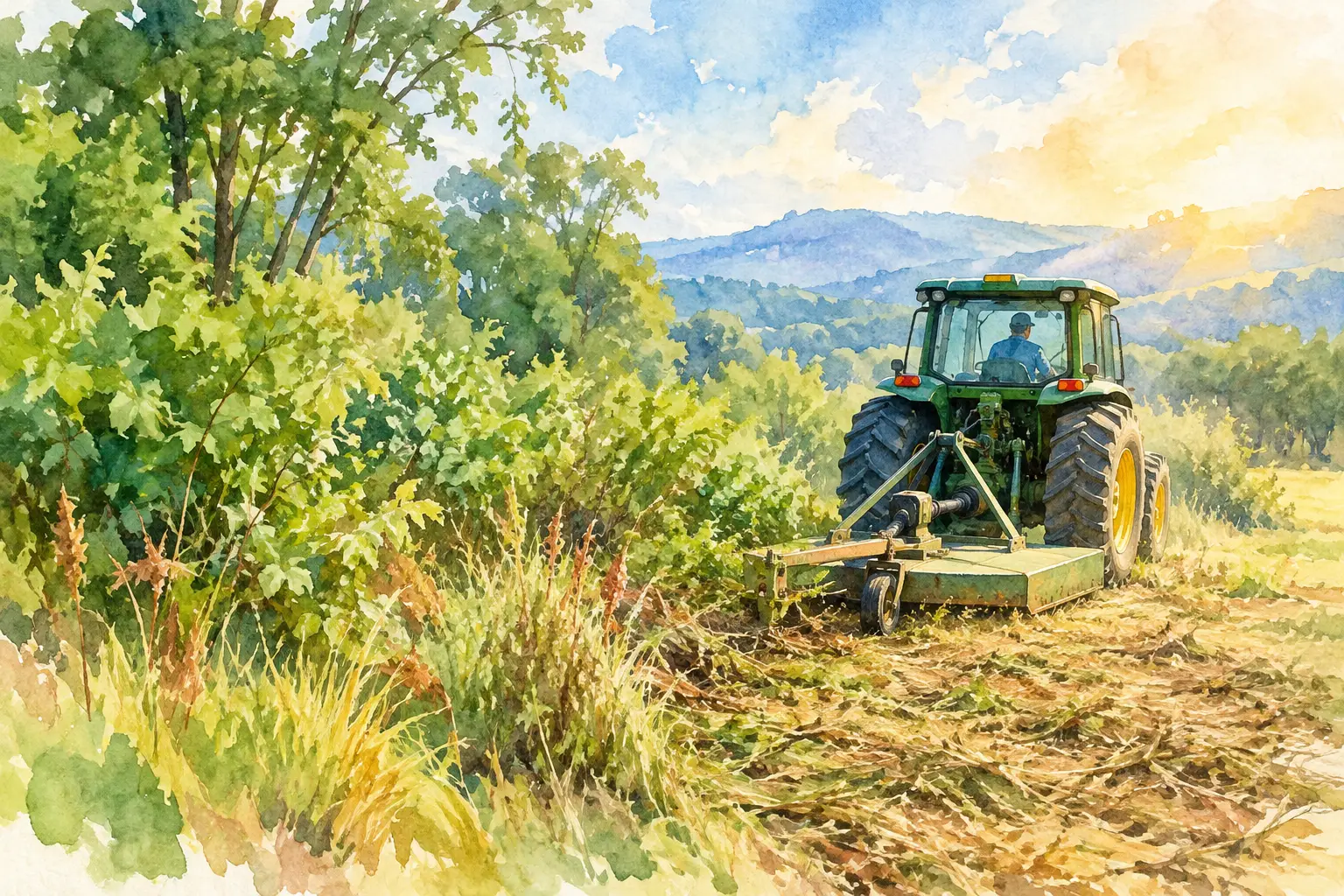
A field can go from “we’ll handle it next weekend” to chest-high weeds faster than most property owners expect. When you need to hire brush hogging help, the right person and equipment can turn an overgrown lot, trail, pasture edge, or back acre into ground you can safely walk, inspect, and maintain again.
Brush hogging is not the same as a weekly lawn cut. It is heavy-duty vegetation clearing, usually done with a tractor-mounted rotary cutter or another machine built to handle tall grass, thick weeds, briars, and light brush. A clear job post and an honest look at the site will help a local worker give you a better response, arrive with the right setup, and get the work done without surprises.
Know When Brush Hogging Is the Right Job
Brush hogging is a good fit when grass and weeds are too tall for a regular riding mower, when a field has become rough and neglected, or when briars and dense growth are closing in on usable space. It can help reclaim a property before a family gathering, improve visibility around an outbuilding, keep a lot from looking abandoned, or make it easier to spot fence damage and fallen limbs.
It is usually not the best choice for a manicured front lawn, flower beds, or areas crowded with landscaping. A brush hog leaves a rougher finish than a lawn mower and may leave cut material behind. That is often exactly what a field or wooded edge needs, but it is worth setting the right expectation before the work starts.
The thickness of the growth matters. Tall grass and ordinary weeds are one thing. Saplings, hidden stumps, old wire, dumped debris, deep ruts, and steep slopes can change the equipment needed, the time involved, and whether a worker can safely take the job. If you are unsure, take a few clear photos and describe what you can see. A good local worker will ask questions rather than promise an easy fix without enough information.
How to Hire Brush Hogging Help With a Clear Job Post
A useful job post saves back-and-forth messages and helps nearby workers decide whether the project matches their equipment and availability. You do not need to know every technical detail. You do need to give a realistic picture of the property.
Start with the location and the approximate size of the area. “About one acre behind the house” is more helpful than “a big yard.” If the area is irregular, explain that too. A half-acre around a home with trees, sheds, and fence corners can take more careful work than an open half-acre field.
Describe the growth in plain language. Mention whether it is knee-high grass, waist-high weeds, blackberry briars, small brush, or a mix. Include known obstacles such as fence lines, creek banks, drainage ditches, trees, utility poles, gates, buildings, or parked equipment. If there is a narrow entrance, soft ground, or a steep section, say so up front.
Be specific about the result you want. You may only need a one-time cut to make the property manageable. Or you may want a recurring seasonal service to keep growth from coming back. Tell workers whether you want paths cut, a full field cleared, vegetation cut around a barn, or only the visible areas near the road.
Photos are especially useful for brush hogging jobs. Take them in daylight from more than one angle, including the entry point where equipment would access the work area. Photos cannot reveal every hazard, but they help workers estimate the scale of the work before they come out.
Equipment, Access, and Safety Affect the Price
Brush hogging quotes can vary because no two overgrown properties are alike. An open, dry field with a wide gate is straightforward. A property filled with obstacles requires slower passes, more turning, and more careful judgment. A worker may need to account for travel time, fuel, machine size, the thickness of vegetation, and whether debris must be moved first.
Be cautious about choosing based on the lowest number alone. A lower price can be a good deal when the worker has the right equipment and understands the task. But a quote may not cover hidden obstacles, extra cleanup, or a site that turns out to be much larger than described. It is reasonable to ask what the quoted price includes and what conditions could require a revised agreement.
Access deserves special attention. Let the worker know where they can park a truck and trailer, whether gates are locked, and how wide the entrance is. If a tractor cannot safely get through, a different machine or approach may be needed. Wet ground can also limit access. Heavy equipment can leave ruts, especially after rain, so flexibility on scheduling may protect both the property and the worker’s equipment.
Safety is not an optional extra on this kind of job. Rotary cutters can throw rocks, sticks, and other debris. Keep children, pets, vehicles, and bystanders well away from the work zone. Do not assume an overgrown area is clear just because it looks empty. Old fence wire, metal scraps, tires, discarded lumber, and hidden holes are common on neglected lots and can create real hazards.
Questions Worth Asking Before You Choose a Worker
A short conversation can tell you a lot about whether a worker is a good fit. Ask what equipment they plan to use and whether it is suited to the terrain and vegetation you described. If you have a slope, ditch, creek edge, or narrow passage, ask how they would handle it. The goal is not to quiz someone on machinery. It is to make sure they have thought through your specific property.
You can also ask whether they need a site visit before confirming the price, how long they expect the work to take, and what they want you to do before they arrive. For a large or complicated project, an in-person look may be the most responsible way to price the job. That may take a little more coordination, but it reduces the chance of misunderstandings.
Reviews and completed-job history can help you feel more confident when you are hiring someone new. On a local marketplace such as Lawns, you can post the work, discuss the details directly with nearby workers, and keep payment in the app after you are satisfied with the completed job. That structure gives both sides a clear record of what was requested and agreed upon.
Trust your instincts during the conversation. A dependable worker should be comfortable asking about hazards, access, and the finished result you expect. They should not pressure you to make a rushed decision or brush off reasonable safety concerns.
Prepare the Property Before the Work Begins
A little preparation can make brush hogging safer and help the worker spend more time cutting rather than stopping to investigate obstacles. Walk the area if you can do so safely. Remove loose items such as hoses, lawn furniture, toys, buckets, wire, and visible trash. Mark anything that cannot be moved, including well heads, decorative rocks, low stumps, septic components, irrigation boxes, and young trees you want protected.
If the property has fences, tell the worker which sections are active and where gates are located. If you want a particular boundary left untouched, identify it clearly. A few bright markers or a quick walk-through can prevent an expensive mistake.
Do not enter heavy brush simply to make it look better for the job. Snakes, ticks, uneven ground, and concealed debris are all possibilities in the Mid-Ohio Valley. Clear only what you can safely see and reach. Let the worker know about anything you suspect may be hidden in the growth.
On the day of service, keep pets inside or far from the work area. Move vehicles away from the cutting zone and leave enough room for equipment to turn around. If you will not be home, make sure gate access, contact information, and the work boundaries are settled beforehand.
Plan for What Happens After the First Cut
The first brush hogging visit is often the hardest one. Once tall vegetation is cut back, you can better see what the land needs next. You may find a fence repair, fallen branches, drainage trouble, junk removal, or a section that needs a different kind of cleanup. That is progress, not a failed job. Clearing the growth makes smart maintenance decisions possible.
If you want to keep the area manageable, schedule the next cut before growth gets out of hand again. The right timing depends on sunlight, rainfall, soil, and how quickly weeds spread on your property. Some open areas may need attention once or twice a year, while a shady edge or low-traffic lot may need less frequent work.
A well-cleared field does more than improve curb appeal. It can make a property feel safer, easier to use, and more cared for. When the work is done by someone from nearby, the benefit stays close to home too: a neighbor earns honest income, and your property gets the attention it needs to stay ready for the season ahead.

