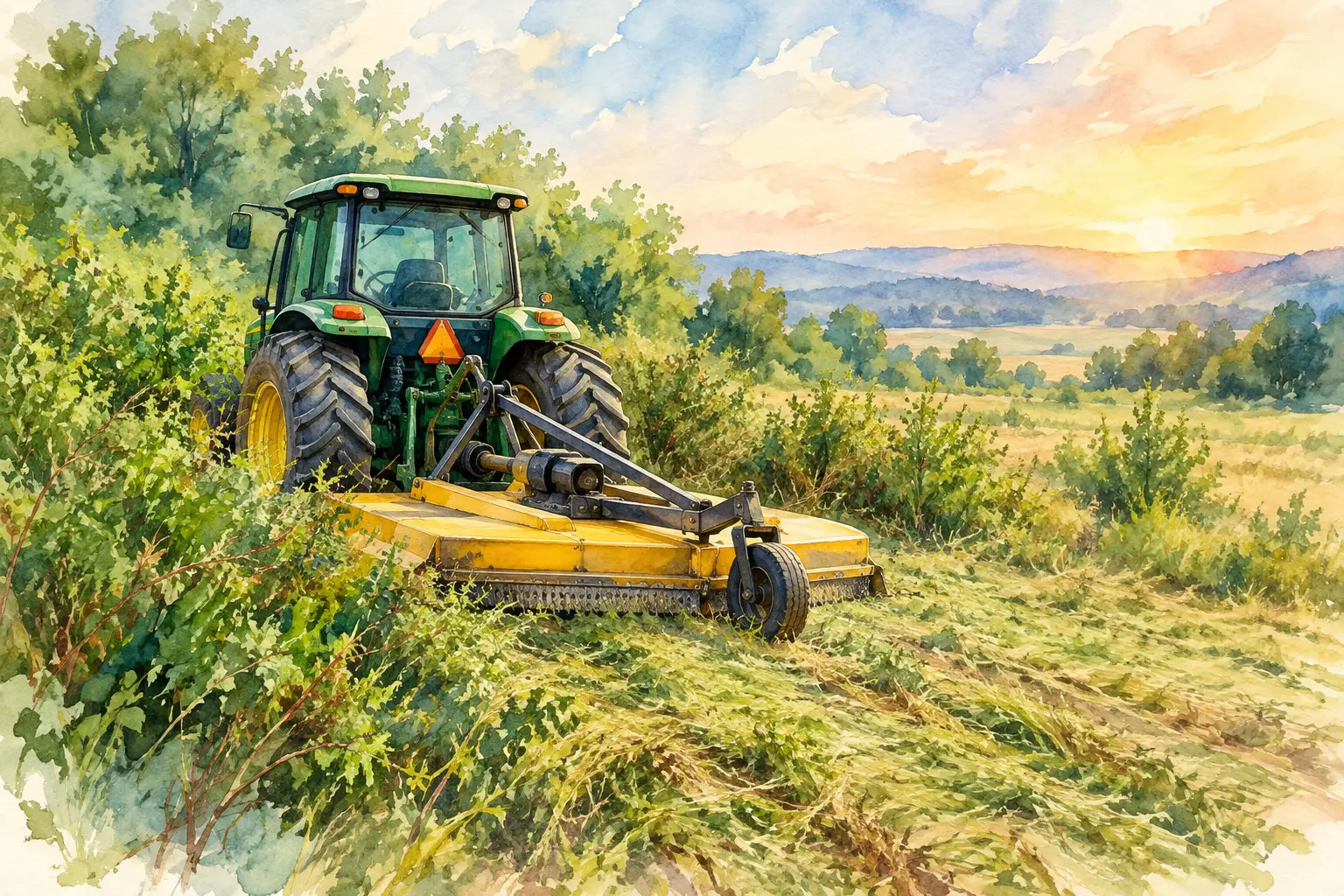
A field can look manageable in early spring and turn into waist-high grass, thorny vines, and woody saplings by midsummer. The best equipment for brush hogging depends less on the size of the property than on what is growing there, how rough the ground is, and whether you have the experience to run heavy machinery safely.
For many Mid-Ohio Valley property owners, brush hogging is the practical answer for reclaiming an overgrown lot, keeping a pasture open, clearing a fence line, or making a vacant property easier to inspect and maintain. The goal is not a manicured lawn. It is controlled, safer ground with fewer places for pests, debris, and unwanted growth to take over.
Start With What You Need to Cut
Before choosing a machine, take a close look at the work area. Tall grass and light weeds are very different from blackberry brambles, multiflora rose, dense brush, or young trees. A mower that handles grass all day may be the wrong tool for a neglected hillside or an old homesite with hidden stumps.
Think about the thickness of the material, not just its height. Most brush cutters list a maximum cutting diameter for woody growth. Staying within that limit matters. Pushing equipment past its rating can damage blades, belts, gearboxes, and hydraulic components. It can also throw debris or cause the operator to lose control on uneven ground.
Terrain deserves just as much attention. A flat, open acre is often straightforward. A steep bank, wet low spot, creek edge, or lot scattered with rocks and fallen limbs calls for a different approach. If you cannot clearly see what is under the vegetation, assume there may be obstacles until the area has been walked and checked.
Best Equipment for Brush Hogging by Job Type
The familiar tractor-mounted rotary cutter is what many people mean when they say “brush hog.” It remains the best fit for many larger, open properties, but it is not the only useful option.
Tractor and PTO Rotary Cutter
For fields, pastures, large yards, and open lots, a compact or utility tractor with a rear-mounted PTO rotary cutter is usually the most efficient setup. The tractor supplies the power, while the cutter uses heavy swinging blades to knock down grass, weeds, and brush within its rating.
This combination works well when there is enough room to turn and travel safely. A five- or six-foot cutter can cover ground quickly, but wider is not automatically better. The cutter must match the tractor’s horsepower, PTO rating, hitch category, and weight capacity. A cutter that is too large can strain the tractor or make steering and braking less predictable, especially on slopes.
Rotary cutters leave a rougher finish than a finish mower. That is expected. Their job is to clear and maintain overgrowth, not leave striped grass behind.
Skid Steer or Compact Track Loader
A skid steer or compact track loader with a brush cutter attachment is a strong choice for thick growth, uneven sites, and properties where maneuverability matters. Track machines can provide better traction on soft ground than wheeled equipment, although no machine is immune to getting stuck in mud.
Hydraulic brush cutters are often effective around dense vegetation and can be useful when access is too tight for a tractor and trailing cutter. They are also helpful for pushing through taller material while keeping the cutting attachment in front of the operator.
The trade-off is cost and operator skill. These machines are powerful, heavy, and expensive to rent or own. They can also tear up soft lawns or loose soil if operated carelessly. For a small residential cleanup, the machine may be more than the job requires.
Walk-Behind Brush Mower
A walk-behind brush mower is often the right answer for smaller properties, narrow access points, and areas that are too tight for a tractor. These machines are built tougher than standard push mowers and can handle tall grass, weeds, and light brush, depending on the model.
They are practical for a backyard edge, a small vacant lot, or a path through overgrowth. They are not ideal for several acres of thick brush. The work takes longer, the operator is closer to the cutting area, and steep or rough terrain can be tiring and risky.
If the growth is mostly tall grass and weeds rather than woody stems, a heavy-duty walk-behind mower may be all that is needed. If saplings and tangled vines are involved, a professional-grade brush mower or a larger machine may make more sense.
Excavator With a Forestry Mulcher
For severe overgrowth, an excavator or skid steer with a forestry mulcher can turn brush and small trees into mulch rather than simply cutting them down. This is specialized equipment for land clearing, trail creation, and heavily wooded edges. It is not the typical choice for routine brush hogging.
Mulching can reduce piles of cut material and create a cleaner-looking result, but it costs more and requires a skilled operator. It may also be unnecessary if the goal is simply to keep a field from growing up. For ongoing maintenance, a rotary cutter is often the more economical choice.
Match the Cutter to the Property, Not the Other Way Around
A common mistake is choosing equipment based on what is available rather than what the property needs. A homeowner may have access to a riding mower, for example, but that does not make it safe for tall brush. Standard lawn mower decks are not designed for hidden rocks, limbs, or woody stems.
A good brush-hogging setup should have enough power for the cutter, sufficient ground clearance, dependable braking, and a cutting width that fits the access points. Check gates, tree spacing, drainage ditches, and the turning room near buildings before arranging the work.
Also consider how often the property will be maintained. An area cut two or three times each growing season may stay manageable with a lighter-duty machine. A field left untouched for years may need a heavier cutter, a preliminary cleanup, or more than one pass. The first pass is often slow because the operator is locating hazards and cutting the growth down to a manageable height.
Safety Is Part of the Equipment Decision
Brush hogging can send rocks, wire, sticks, and other hidden debris flying. It should never be treated like ordinary lawn mowing. The work area needs a careful walk-through when possible, especially near homes, roads, vehicles, pets, fences, and neighboring properties.
Operators should use appropriate eye and hearing protection, sturdy boots, long pants, and equipment in good working order. Tractor operators also need rollover protection and a seat belt when the tractor is equipped with a rollover protective structure. Never allow riders on a tractor or brush cutter.
Keep people and animals well away from the work zone. Do not cut near a road or public area without considering where debris could travel. On slopes, follow the machine manufacturer’s operating guidance and avoid situations where traction or stability is uncertain. Wet grass, hidden holes, and a raised cutter can change how a machine handles.
Power take-off equipment requires special care. PTO shields and driveline guards should be in place before work begins. If something jams, shut down the machine completely and wait for all moving parts to stop before inspecting it. A few minutes of caution is worth far more than a damaged machine or a serious injury.
When Hiring a Local Worker Makes More Sense
Owning brush-hogging equipment makes sense for some farms and larger properties. For a one-time cleanup or occasional maintenance, hiring a capable local worker can be simpler. You avoid transporting equipment, learning unfamiliar controls, storing a large machine, and handling maintenance after the job is finished.
When posting a brush-hogging job, describe the property honestly. Include the approximate area, the type and height of growth, slope conditions, gate width, known obstacles, and whether there is a nearby place to park a trailer. Photos can help a worker estimate the right machine and give a more realistic price.
On Lawns, property owners can connect with nearby workers, discuss the job details directly, and arrange a time that works for both sides. Clear communication helps local workers arrive prepared, and it helps you get the result you expected without surprises.
Before work starts, agree on the boundaries of the area, whether debris will be left where it falls, and what level of finish you want. Brush hogging usually means cutting material down, not hauling it away or removing stumps. If you need those extra services, say so from the beginning.
A cleared property is easier to enjoy, inspect, and care for. Choose equipment that respects the terrain, the growth, and the person operating it, then keep the area maintained before the next season turns a simple cutting job into a major project.

