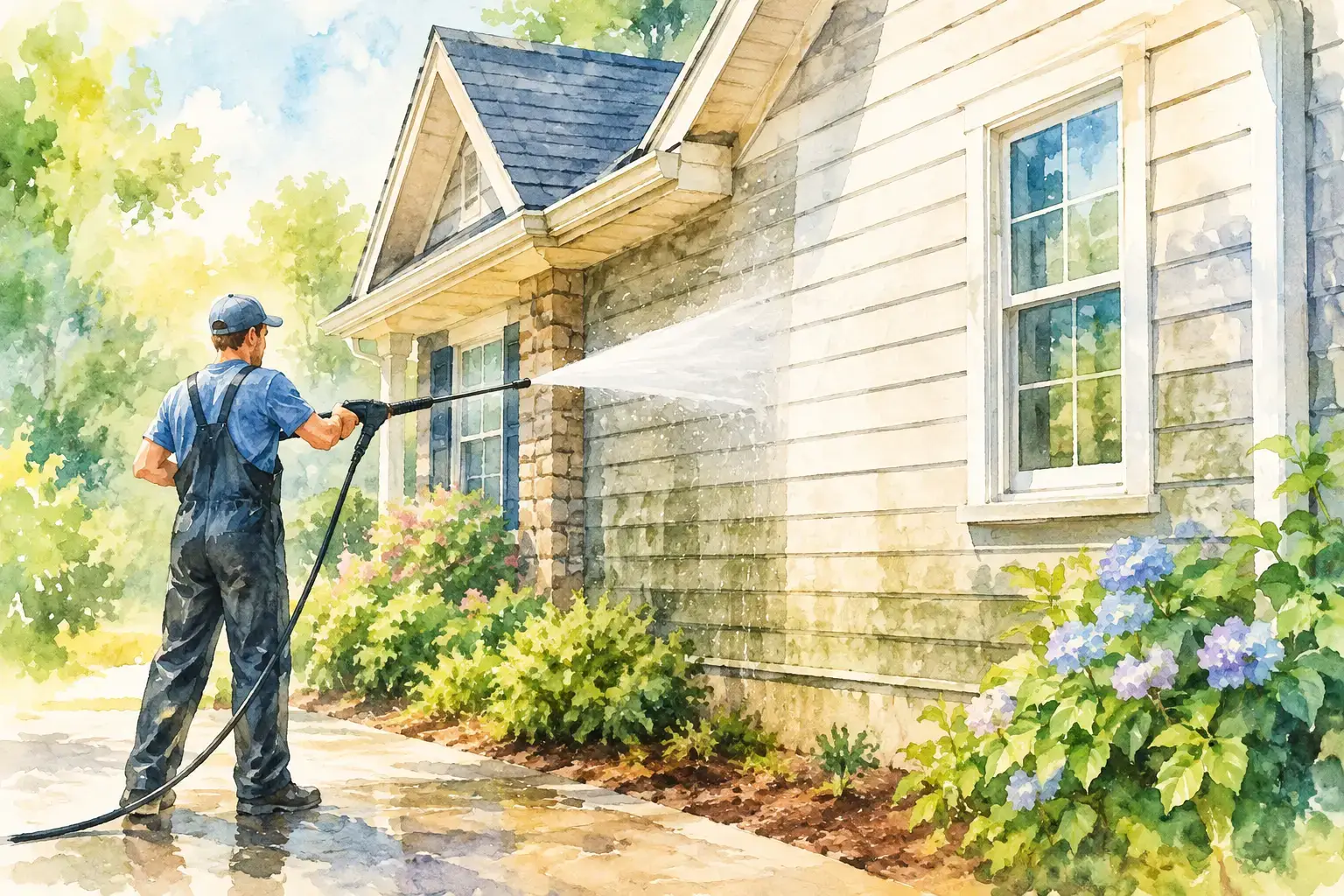
A green film on the front walk, winter grime on the siding, and dark streaks across the driveway can make a well-kept home look tired fast. Power washing is one of the quickest ways to freshen those hard surfaces, but it is not a one-setting solution. The same force that lifts mildew from concrete can scar wood, force water behind siding, or strip a deck of its finish when it is used carelessly.
For Mid-Ohio Valley homeowners, regular exterior cleaning is about more than curb appeal. It can help reduce slippery walkways, keep buildup from settling into surfaces, and make it easier to spot small maintenance concerns before they become expensive repairs. The key is knowing what needs pressure, what needs a gentler wash, and when a nearby professional is the better call.
What Power Washing Is Good For
Power washing uses pressurized water to break up dirt, algae, mud, mildew, and other stuck-on buildup. It is especially effective on durable outdoor surfaces that see a lot of foot traffic or vehicle traffic. Driveways, sidewalks, patios, brick paths, retaining walls, and many concrete porches are common candidates.
Concrete is often the easiest place to see a difference. A driveway can collect tire marks, leaf stains, oil drips, road salt residue, and black algae over time. Cleaning it can make the entire front of a property look more cared for, even before you touch the landscaping.
Walkways deserve attention for a more practical reason: safety. Moss and algae can turn steps, pavers, and shaded concrete slick after rain. Cleaning does not replace a needed repair or improve poor drainage, but it can remove the surface buildup that makes a path harder to walk on.
Power washing can also help with fences, decks, and siding, but these surfaces call for much more caution. The right method depends on the material, its condition, and the cleaning product being used. In many cases, lower-pressure washing is the safer choice.
Power Washing vs. Soft Washing
The phrase power washing gets used for almost every kind of exterior cleaning, but pressure level matters. High pressure is best reserved for tough, durable surfaces. Soft washing relies on lower pressure and an appropriate cleaning solution to loosen organic growth without blasting the surface itself.
Vinyl siding, painted wood, older brick, roof shingles, screens, and many deck surfaces are usually better suited to a soft-wash approach. High pressure on siding can push water into seams and around windows. On wood, it can leave fuzzy fibers, gouges, and uneven marks that require sanding and refinishing. On a roof, it can dislodge protective granules or damage shingles.
There is no single pressure setting that works for every home. A newer composite deck may handle cleaning differently than a weathered wood deck. A small patch of mildew may only need a gentle treatment and rinse, while a stained concrete patio may need more force. Good cleaning starts with the surface, not the machine.
Areas That Need a Careful Hand
Before any washing begins, take a close look at the condition of the area. Loose mortar, cracked concrete, peeling paint, damaged caulk, rotting boards, and broken siding should be repaired or handled with extra care. Pressure can turn a small weak spot into a bigger problem.
Windows, exterior lights, outlets, door seals, vents, and air-conditioning equipment should be protected from direct spray. Close windows tightly, move outdoor furniture, and cover or relocate items that could be damaged by water or cleaning products. Plants also deserve attention. Rinsing shrubs and flowers before and after cleaning can help reduce exposure to cleaners.
Be especially cautious around lead paint on older homes. If paint is peeling or its age is uncertain, do not use high pressure to remove it. Disturbing old paint can create a health hazard and scatter debris across the yard.
Oil spots on a driveway are another example of why expectations matter. Power washing can improve their appearance, especially with the right degreaser, but deep stains may not disappear completely. The longer oil has soaked into porous concrete, the harder it is to remove. A reliable worker should be honest about that before starting the job.
When to Schedule Exterior Cleaning
Spring is a popular time for power washing because winter leaves behind salt, mud, and grime. It is also a practical time to clean patios, porches, and walkways before outdoor gatherings pick up. Still, spring is not the only good option.
Late summer and early fall can be ideal for cleaning buildup after a humid season, particularly on shaded sides of a home where algae grows quickly. A clean driveway or walkway before colder weather arrives can also make routine snow removal easier to manage.
Weather matters more than the calendar. Choose a day with mild temperatures and enough dry time for surfaces to drain and dry. Avoid freezing conditions, high winds, and days when heavy rain is expected right after cleaning. If a deck will be stained or sealed afterward, it needs additional drying time, so plan ahead rather than rushing the project before a weekend event.
Most homes do not need every surface washed every year. Shaded, damp areas may need attention sooner, while sunny concrete and well-maintained siding can often go longer. Look for visible algae, dirt trails under windows, slippery spots, or a general dull appearance instead of following a rigid schedule.
Deciding Between DIY and Hiring Local Help
A small concrete pad can be a manageable do-it-yourself project if you have the equipment, understand how to use it, and can work safely. But renting a machine, buying cleaners, moving furniture, and spending a Saturday learning the technique may not be worth it for everyone.
Hiring help makes particular sense for larger driveways, multi-level decks, second-story siding, delicate materials, or projects that need cleaning and prep work done together. It is also a good option if mobility, time, or comfort with equipment is a concern. A skilled local worker can bring the right tools, discuss the surface before starting, and help set realistic expectations about stains or discoloration.
When you post a power washing job, include clear photos and describe the areas you want cleaned. Mention the material – concrete, vinyl, brick, wood, composite decking, or pavers – along with approximate size and any stains, mildew, or damage you have noticed. That gives nearby workers a better chance to respond with an accurate price and plan.
On Lawns, you can set your preferred timing and budget, chat directly with interested local workers, and agree on the details before the work begins. Reviews, secure in-app payment after satisfaction, and direct communication help keep a straightforward home project feeling straightforward.
A Better Result Starts Before the Water Runs
The best exterior cleaning jobs are not the ones with the strongest spray. They are the ones that protect the property while making the right surfaces look clean again. Ask what method will be used, whether a cleaning solution is needed, how plants and fixtures will be protected, and what result is realistic for old stains.
A fresh driveway, safer front steps, or a cleaner patio can make coming home feel better. With the right care and a neighbor who knows the job, it is one more practical way to keep your home and your block looking looked after.

