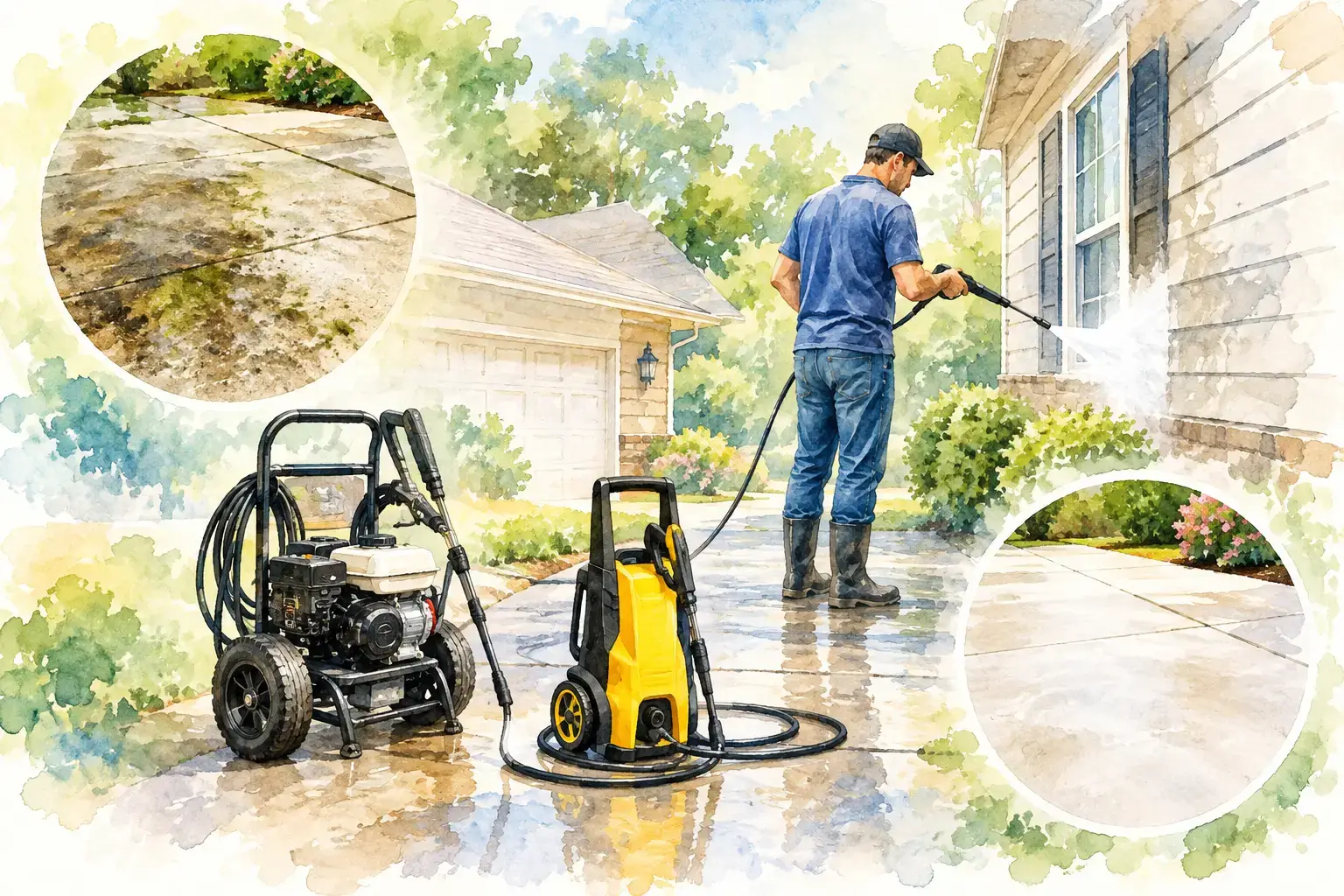
A dirty driveway can make an otherwise well-kept home look neglected. Green streaks on siding, black buildup on a patio, and slippery algae on steps are more than cosmetic problems, especially in the damp seasons common around the Mid-Ohio Valley. This pressure washing comparison helps you decide whether to do the job yourself, hire a local worker, or choose a different cleaning method altogether.
The right choice is not always the cheapest option at the start. It depends on the surface, the size of the job, the equipment you have, and how comfortable you are working with water under serious pressure.
Pressure Washing Comparison: Start With the Surface
Pressure washing is often used as a catchall phrase, but the surface should lead the decision. Concrete can usually handle more pressure than painted wood, vinyl siding, roof shingles, or older brick. Using too much force in the wrong place can leave permanent marks, strip paint, force water behind siding, or damage mortar.
For driveways, sidewalks, patios, and some retaining walls, a pressure washer can be an efficient choice. These hard surfaces collect tire marks, mud, mildew, oil stains, and algae that a garden hose will not remove. A surface cleaner attachment can produce a more even result than a narrow spray wand, particularly on large concrete areas.
Siding needs more care. Vinyl, painted wood, and fiber cement often benefit from a lower-pressure wash combined with an appropriate cleaner. The goal is to lift grime without driving water into seams, vents, windows, or electrical fixtures. A worker who understands soft washing can clean these areas with lower pressure and a detergent solution rather than treating every surface like a driveway.
Roofs are a separate category. High-pressure washing can loosen granules from asphalt shingles and shorten the roof’s useful life. If roof staining is the concern, ask about a roof-safe, low-pressure treatment instead. The same caution applies to older brick, loose mortar, delicate stone, and weathered decks.
DIY Pressure Washing vs. Hiring Local Help
Doing the work yourself can make sense for a small, straightforward job. If you already own a washer, need to clean a short walkway, and know the surface can handle it, DIY offers flexibility. You can work when the weather cooperates and move at your own pace.
The trade-off is preparation and risk. You need to connect hoses, protect plants, move furniture, choose the right nozzle, manage runoff, and clean up afterward. Rental equipment can also be heavier and more powerful than expected. A moment of inattention can etch concrete, shred window screens, scar deck boards, or send dirty water toward a garage or basement door.
Hiring local help is often a better fit when the job involves multiple surfaces, second-story areas, stubborn staining, or equipment you do not want to rent and transport. It also makes sense for older adults, busy families, landlords preparing a property, or anyone who simply wants their Saturday back.
A local worker should be able to discuss the surface, the cleaning approach, and what is included before starting. Ask whether they will use high pressure, soft washing, detergent, or a combination. A clear conversation upfront prevents the most common mismatch: expecting a deep concrete restoration when the price only covers a quick rinse.
Electric vs. Gas Pressure Washers
If you plan to handle smaller jobs yourself, the equipment choice matters. Electric pressure washers are generally lighter, quieter, and easier to start. They work well for patio furniture, small decks, grills, vehicles, steps, and light dirt on sidewalks. Their lower output can be an advantage on more delicate materials, though it may take longer to clean deeply stained concrete.
Gas pressure washers generally deliver more cleaning power and greater mobility because they do not need an outlet. They are often used for long driveways, large patios, fences, and heavy buildup. That power comes with more noise, fuel, maintenance, weight, and potential for damage if the wrong tip or technique is used.
The strongest machine is not automatically the best machine. Water pressure, measured in PSI, affects how forcefully water hits the surface. Water flow, measured in GPM, affects how quickly debris can be rinsed away. A balanced machine, correct nozzle, and patient technique usually produce better results than blasting a surface at the highest setting.
What a Fair Pressure Washing Price Should Cover
Pressure washing prices vary because the work varies. A small front walk is different from a large driveway, a two-story house wash, or a deck that needs careful low-pressure cleaning. Square footage matters, but so do access, slope, water availability, stain severity, furniture moving, and whether a cleaner or stain treatment is needed.
When comparing quotes or job responses, focus on the scope rather than just the lowest number. Confirm which areas will be cleaned, whether edges and steps are included, how heavy stains will be handled, and whether the worker will protect nearby landscaping. If you want the gutters, windows, deck, and driveway done at the same time, say so in the original job details. A complete description leads to clearer pricing.
For a local marketplace job, photos can help workers understand what they are bidding on. Include wide shots of the area, close-ups of the staining, and any access concerns such as a gated yard, steep steps, or limited parking. You retain control over timing and price expectations while nearby workers can respond with a plan that matches the job.
When Pressure Washing Is Not the Answer
Some marks need a different solution. Rust stains, oil spots, efflorescence on masonry, paint overspray, and deep organic staining may require a specialized cleaner, pretreatment, or repeated service. Pressure alone may lighten the stain without fully removing it.
Pressure washing also will not fix structural problems. If water is entering around windows, siding is loose, concrete is crumbling, or a deck board feels soft, cleaning should wait until the underlying issue is addressed. A clean surface can make damage easier to see, but it should not hide a needed repair.
Be thoughtful about runoff as well. Avoid washing chemicals, oil residue, or heavy debris directly toward storm drains. Move pet bowls, toys, planters, and outdoor furniture before work begins. Cover or rinse nearby plants as appropriate, and keep pets and children clear of the work area until surfaces are dry.
A Simple Way to Choose
Choose DIY when the area is small, the material is sturdy, you have suitable equipment, and you are prepared to spend time learning the correct technique. Choose a local worker when the project is large, high, delicate, heavily stained, or likely to turn into an all-day chore.
Lawns can make that second option feel more neighborly and straightforward: post the job, share the location and details, talk with nearby workers, and arrange the service that fits your home and schedule. Reviews, direct communication, and secure in-app payment give both sides a clearer path from request to completed work.
A cleaner exterior does more than improve curb appeal. It helps make steps safer, keeps outdoor spaces more inviting, and lets you enjoy the home you work hard to maintain. Pick the approach that protects your surfaces, respects your time, and keeps good work close to home.

