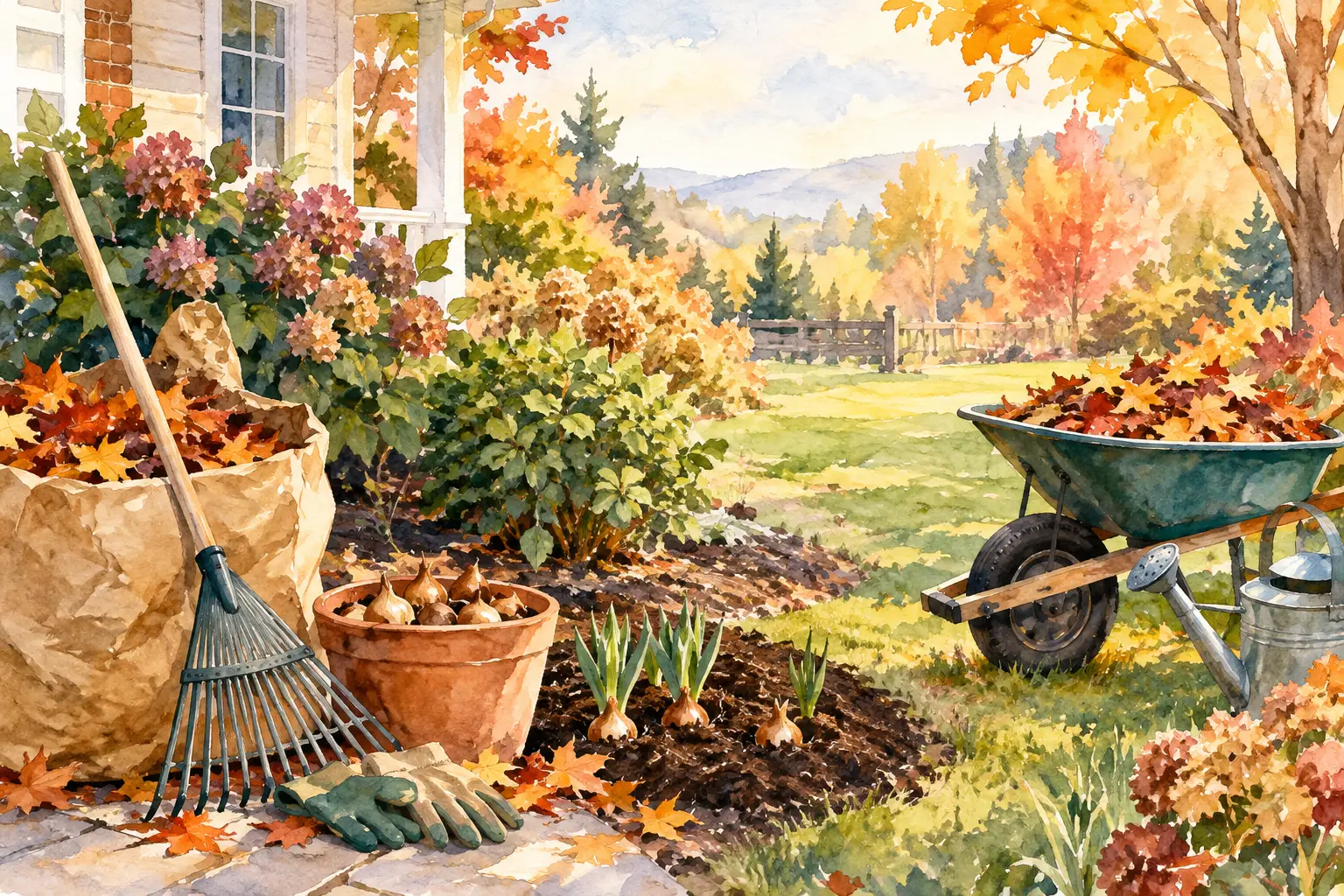
A yard can look mostly fine in October and still create a long list of spring problems. Wet leaves trap moisture, clogged gutters send water toward the foundation, and thin grass has all winter to get thinner. The best fall yard projects handle those small jobs before cold weather turns them into costly, muddy, or frustrating ones.
For homeowners and renters across the Mid-Ohio Valley, fall work is not about chasing a picture-perfect lawn. It is about making the property safer, easier to maintain, and ready for whatever winter brings. Start with the jobs that protect your home, then work toward the ones that set up a healthier yard next year.
The Best Fall Yard Projects Start With Cleanup
Clear leaves before they smother the lawn
A blanket of dry leaves can be pretty for a weekend. After a few rains, it becomes a heavy mat that blocks sunlight and holds moisture against the grass. That can encourage bare spots, mold, and a soggy lawn when spring arrives.
Rake or blow leaves regularly rather than waiting for every tree to finish dropping. If the layer is light, mulching leaves with a mower can return organic matter to the soil. If it is thick, bag it, compost it, or arrange for yard cleanup and hauling. Keep leaf piles away from storm drains, walkways, and the base of your house.
This is also a good time to collect fallen branches, old flower stalks, and loose debris from beds and fence lines. A cleaner yard gives you a clearer view of issues such as damaged edging, low spots, or branches hanging over a roof.
Clean gutters and check where water goes
Gutter cleaning is one of those fall projects that is easy to postpone and unpleasant to ignore. Leaves and twigs can block downspouts, causing water to spill over near the foundation, stain siding, or freeze into slippery patches once temperatures drop.
After the trees have shed most of their leaves, clear the gutters and run water through the downspouts. Make sure water is moving away from the home, not pooling by the foundation or washing out a garden bed. If you are uncomfortable with ladders, this is a smart job to hand off. The goal is not simply clean gutters – it is dry, controlled drainage around your home.
Remove debris from hard surfaces
Leaves left on decks, patios, porches, and driveways can stain surfaces and become slick after rain or frost. Sweep them away, especially from steps and entry paths. A fall power wash can help remove summer grime from concrete, siding, or a deck, but check the forecast first. Surfaces need enough time to dry before freezing temperatures arrive.
Build a Better Lawn Before Winter
Test the soil instead of guessing
If your grass struggled through summer, fertilizer is not always the answer. A soil test can reveal whether your lawn needs lime, nutrients, or a different approach altogether. Much of West Virginia and southeastern Ohio has naturally acidic soil, but every yard is different.
Testing in fall gives you time to make adjustments before spring growth begins. Follow the recommendations rather than applying products at random. Too much fertilizer can create runoff concerns and encourage weak, fast growth at the wrong time.
Aerate compacted areas
Compacted soil is common where kids play, dogs run, vehicles park, or people take the same shortcut across the yard. Water may puddle instead of soaking in, and grass roots have a harder time spreading. Core aeration pulls small plugs from the soil, improving airflow and helping water and nutrients reach the roots.
Cool-season lawns usually respond well to fall aeration, particularly when the ground is moist but not muddy. It is not necessary for every property every year. If the lawn drains well and feels soft underfoot, focus your effort elsewhere. But for worn paths and dense clay soil, it can make a noticeable difference.
Seed thin spots while the weather helps
Early fall is generally the best window for overseeding cool-season grass because the soil is still warm while air temperatures are milder. That combination supports germination without the stress of peak summer heat.
Prepare bare patches by loosening the top layer of soil and removing leaf cover. Spread a grass seed suited to your yard’s sunlight and traffic level, then keep it consistently damp until established. Timing matters: seed too late, and young grass may not have enough time to develop before hard freezes. If the season is already well advanced, protect the soil with leaves or mulch and plan an early spring repair instead.
Protect Beds, Trees, and Outdoor Equipment
Mulch with purpose
Fresh mulch makes a yard look cared for, but its real job is moisture control and root protection. Add a modest layer around trees, shrubs, and perennial beds after removing weeds and dead plant material. Two to three inches is usually enough.
Keep mulch several inches away from tree trunks and shrub stems. Mulch piled against a trunk can hold moisture where it does not belong and invite pests or decay. Think of it as a wide ring, not a volcano.
Cut back only what needs cutting back
Fall pruning has trade-offs. Removing dead, diseased, or damaged branches is helpful, and trimming back spent annuals can tidy beds. But heavy pruning of shrubs and trees can stimulate tender new growth or remove buds that would bloom next season.
For most established shrubs, save major shaping for the proper pruning season. If you are unsure what a plant is or when it blooms, take a photo and ask a knowledgeable local gardener before cutting. A few careful cuts are better than a weekend of aggressive trimming.
Winterize hoses, tools, and outdoor water
Disconnect hoses, drain them, and store them where they will not crack in freezing temperatures. Shut off outdoor water supply lines if your home has an interior shutoff, then drain the exterior spigot. This small task can prevent a damaged hose bib or water line after a hard freeze.
Clean soil and grass from mower decks, trimmers, and garden tools. Empty fuel-powered equipment according to the manufacturer’s guidance or use a fuel stabilizer if it will sit for months. Sharpening blades now means less scrambling when mowing season returns.
Make Winter Safer Before the First Storm
The best fall yard projects are not limited to landscaping. Take a slow walk from the driveway to each entrance at dusk. Look for uneven pavers, low-hanging limbs, dim lighting, loose railings, and anything that could become a problem under snow or ice.
Move firewood, patio furniture, planters, and lawn decorations out of the way before winter weather arrives. Mark the edges of driveways, curbs, and garden beds if snow removal will be needed. This protects both the property and the person clearing it.
It also helps to decide ahead of time how you will handle snow, salting, or downed branches. Waiting until the first storm is usually when schedules are busiest and supplies are hardest to find.
Choose Projects That Match Your Time and Energy
You do not need to complete every possible fall task in one weekend. Prioritize by risk and impact. Water management, leaf removal near the house, and safe walkways come first. Lawn improvement and cosmetic bed work can follow as time allows.
For bigger cleanups, heavy branch removal, gutter work, or jobs that are difficult on your back and knees, local help can make the season more manageable. With Lawns, you can post the work you need, share the timing and price you have in mind, and connect with nearby workers who are ready to help keep the neighborhood looking cared for.
A few hours spent on the right fall work can make winter less stressful and spring far more enjoyable. Start with the corner of the yard that causes the biggest headache, finish one useful project, and let that momentum carry you through the season.

