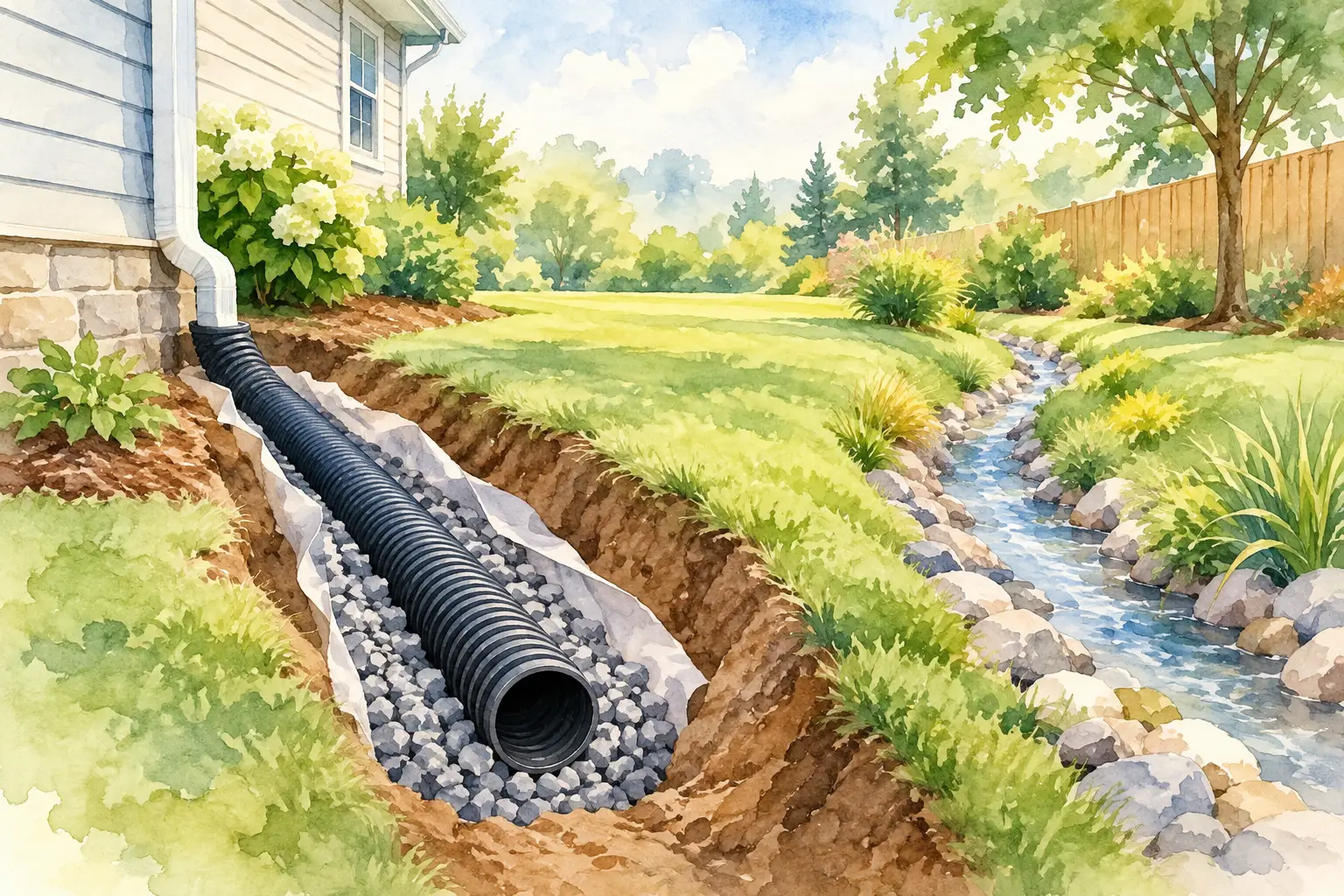
A puddle beside the house after every hard rain is more than an eyesore. Water that lingers near a foundation, crosses a driveway, or turns a backyard into mud can damage landscaping, make walking unsafe, and create problems that grow more expensive over time. Thoughtful drain and ditch installation gives that water a planned path away from the places you use and protect most.
For homeowners across the Mid-Ohio Valley, the right solution depends on the slope of the lot, the soil, the source of the water, and where it can safely go. A shallow swale may solve one yard’s problem. Another property may need a French drain, a catch basin, or a properly graded ditch. The goal is not simply to move water somewhere else. It is to manage it responsibly without creating a new issue for a neighbor, sidewalk, road, or downstream area.
Start With the Water’s Story
Before anyone digs, watch the property during a steady rain if it is safe to do so. Notice where runoff starts, where it gathers, and which direction it travels. A wet spot in the middle of the lawn may be caused by roof runoff, a low area in the grade, an uphill neighbor’s runoff, a clogged gutter, a failing downspout extension, or water coming off a driveway.
This step matters because drainage work is only as good as the diagnosis. Installing a drain at the lowest visible puddle can be a wasted effort if water continues entering from a higher point. A good plan follows the water from its source to a legal, suitable discharge area.
Pay attention to warning signs such as soil washing away, mulch displaced after rain, standing water that remains for more than a day or two, water marks on basement walls, and ruts along a drive or walkway. If water is entering a basement or threatening the foundation, treat it as a priority rather than a weekend yard project.
Common Options for Drain and Ditch Installation
Drainage solutions are not one-size-fits-all. The right choice should fit the amount of water, the available slope, the appearance you want, and the maintenance you can reasonably handle.
Swales and Grading
A swale is a broad, shallow channel shaped into the lawn to guide surface water across a property. It can look like a natural part of the yard when it is properly graded and seeded. Swales are often a practical choice for widespread runoff because they move water above ground, where it is easier to inspect and maintain.
The trade-off is space. A swale needs enough width and a steady downhill path to work well. On a small lot or a yard with little slope, it may not be enough on its own.
French Drains
A French drain is a trench containing gravel and perforated pipe. Water enters through the gravel and is carried through the pipe to an approved outlet. This option can help with soggy lawns, water collecting beside patios, and some foundation drainage concerns.
French drains require careful slope, quality filter fabric, the right stone, and a dependable outlet. Without those details, the pipe can clog or hold water instead of moving it. They are usually better handled by someone who understands drainage layout rather than treated as a simple trench-and-pipe job.
Catch Basins and Solid Drain Pipe
A catch basin collects runoff at a low point, often near a driveway, patio, downspout, or hardscape edge. Solid pipe then carries the water away. This is useful when water moves quickly across a paved or compacted surface and needs to be captured before it reaches a garage, walkway, or foundation.
Catch basins need cleaning. Leaves, gravel, and mulch collect inside them, especially after storms. A basin that is never checked can become its own source of standing water.
Open Ditches
An open ditch can carry a large amount of runoff and may be appropriate along rural roads, larger properties, or the edge of a drive. It can be simple and effective, but it must be shaped to prevent erosion and kept clear of brush, fallen limbs, and sediment.
Roadside ditches deserve extra caution. They may fall under local, county, or state requirements, and changing them can affect road drainage or neighboring properties. Never assume a roadside ditch is yours to alter just because it borders your yard.
Plan the Outlet Before the Trench
Every drainage system needs somewhere for water to go. That sounds obvious, but it is the detail most likely to separate a lasting fix from a new headache.
A drain should not discharge against a foundation, onto a neighbor’s lot, across a sidewalk where it can freeze, or into an area that will immediately flood. Depending on the property and local rules, an outlet may lead to a lower part of the yard, a drainage easement, an approved stormwater connection, or another designated area.
If the project affects a public ditch, road right-of-way, creek, wetland, or shared drainage path, check with the appropriate local office before starting. Permits and rules can vary by location. A little homework protects you from having to redo work later.
Also call 811 before digging. Utility lines are not always where you expect them to be, and a trench for drainage can be deep enough to create a serious safety risk. Marked utilities, a clear route, and a realistic plan should come before rented equipment arrives.
When Local Help Makes Sense
Some small drainage improvements are manageable for a capable homeowner, such as extending a downspout, cleaning a catch basin, or reshaping a minor low spot. Larger drain and ditch installation jobs often call for experienced local help, especially when they involve excavation, buried pipe, significant grading, erosion control, or water near the home.
When posting a drainage-related job, include clear photos and describe what happens during rain. Mention the approximate area, whether the water affects a house, driveway, or yard, and whether you have noticed a possible outlet location. That gives nearby workers a better starting point and helps them explain what they can handle.
Ask practical questions before agreeing to the work. How will the worker identify the water source? What slope will the pipe or ditch need? Where will the water discharge? Will excavated soil be spread, hauled away, or reused? Who is responsible for restoring grass, gravel, or landscaping after the trench is closed?
For jobs that may require permits, engineered drainage plans, or specialized equipment, choose a properly qualified professional. Local workers can still be valuable for site cleanup, hauling, brush removal, gutter cleaning, downspout extensions, landscape restoration, and routine ditch maintenance around a larger project.
Protect the Work After Installation
Drainage systems need attention after the first few storms. Walk the route and look for settling soil, exposed pipe, washed-out gravel, or water escaping the intended path. It is much easier to correct a small dip in a trench or a blocked outlet early than after a season of heavy rain.
Keep gutters clean, make sure downspouts remain connected, and remove leaves and debris from ditch lines and catch basins. Avoid driving heavy vehicles over buried drain lines unless they were designed and installed for that load. If you mow over a swale, keep the grass healthy enough to hold soil in place.
A good drainage plan should also respect the rest of the property. Fresh grading can disturb lawn areas, shrubs, or mulch beds, so plan for seed, straw, sod, or other restoration. If erosion is a concern, consider ground cover or other stabilization that suits the slope and sunlight.
A Better Yard Starts With a Clear Path for Water
Water will always follow gravity. The useful question is whether your property gives it a safe route. With careful observation, a responsible outlet, and the right level of local help, drainage work can protect your home while making the yard easier to enjoy after the rain stops.
Whether you need a simple cleanup around an existing ditch or help preparing for a larger project, keeping work local means your home improvement can support the neighbors who know this area’s rain, hills, and soil firsthand.

