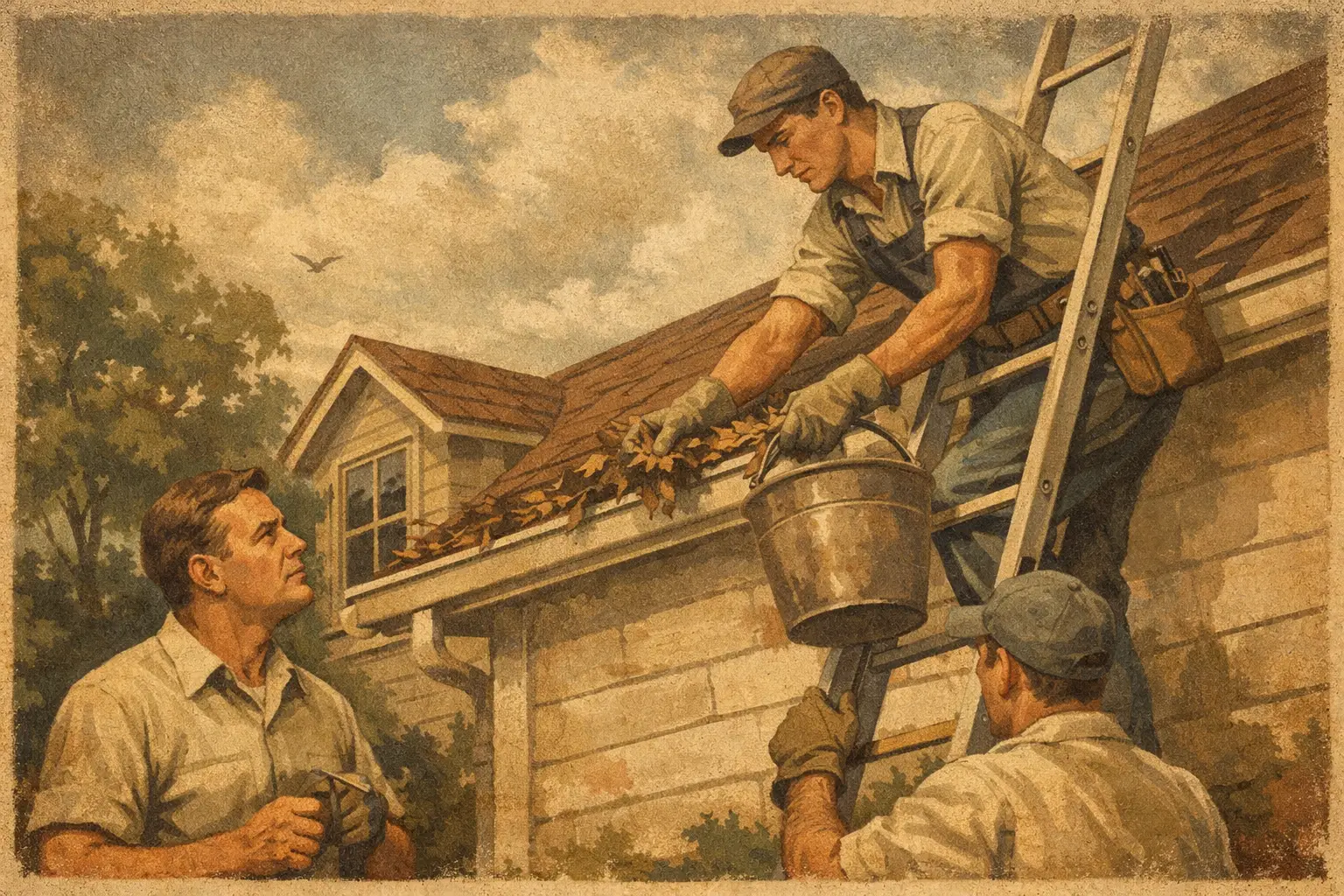
A gutter can look harmless from the ground, right up until water spills over the edge during a hard Mid-Ohio Valley rain. If you need help cleaning gutters, the goal is not just to make the roofline look better. It is to keep water moving away from your siding, foundation, landscaping, and walkways before a small clog turns into an expensive repair.
For many homeowners, gutter cleaning is one of those jobs that keeps getting pushed to next weekend. Ladders feel unsteady, the roof is steep, leaves are packed into the downspouts, or there simply is not time between work, family, and everything else on the list. Asking for local help is a practical choice, especially when it means getting the job handled before the next storm.
Why clean gutters matter more than most people think
Gutters have a straightforward job: catch rainwater running off the roof and direct it safely through downspouts. When leaves, twigs, shingle grit, seed pods, or moss block that path, water finds another route. It may run over the gutter, soak the fascia board, splash against the foundation, or pool near an entryway.
Over time, that overflow can contribute to peeling paint, wood rot, wet basements, soil erosion, and icy patches in winter. A clogged gutter can also become heavy enough to pull away from the house. The exact risk depends on the home, its roofline, surrounding trees, drainage, and condition of the gutters, but regular attention is usually far less costly than waiting for visible damage.
This is particularly true for homes with mature trees nearby. Oak leaves, maple seeds, pine needles, and spring blossoms each create different kinds of clogs. Even a home without many trees can collect roof grit that settles in elbows and downspout openings.
Signs it is time to get help cleaning gutters
You do not need to climb a ladder to know the gutters need attention. Watch the house during or shortly after rain. Water pouring over the sides is the clearest sign, but it is not the only one.
Look for plants growing from the gutter, dark streaks on siding, sagging sections, standing water near the foundation, or downspouts that barely release water. You may also see leaves piled along the roof edge or hear dripping in places where water should be flowing through a downspout.
A seasonal schedule helps prevent those problems. Many homes benefit from a cleaning in late fall after most leaves have dropped and another in spring after winter debris and early blooms. Homes under heavy tree cover may need more frequent service. A quick check after a major windstorm is also wise, especially if branches or seed pods are scattered across the yard.
When hiring help is the safer call
Some homeowners are comfortable cleaning a single-story gutter on a dry, level property with the right ladder and another person nearby. But there is a difference between being able to do a task and needing to do it yourself.
It makes sense to hire help when the home has two stories, uneven ground, a steep roof, tall gutters, heavy debris, or a history of drainage trouble. The same is true when mobility, balance, time, or comfort on a ladder is a concern. No weekend chore is worth a fall.
Professional-grade equipment can make a difference, but it is not always necessary for an ordinary cleanup. What matters is that the person doing the work can safely reach the gutters, clear debris without damaging them, and confirm that water can travel through the downspouts. If there are loose gutters, damaged fascia, electrical lines nearby, or suspected roof damage, the work may call for a more specialized contractor rather than a basic cleaning job.
What a good gutter-cleaning job should include
Clear details prevent surprises for both the homeowner and the worker. A standard gutter-cleaning request usually means removing loose debris from accessible gutters, clearing reachable downspout openings, bagging or gathering the debris, and checking for obvious overflow points.
Before work begins, agree on what is included. Ask whether the downspouts will be tested with water, where debris will be placed, and whether the job covers attached garage gutters, porch gutters, or only the main roofline. If you want the outside of the gutters washed to remove visible staining, say so. Exterior brightening is a separate task from clearing clogs and may take additional time.
It also helps to mention anything unusual before the worker arrives. Let them know about locked gates, dogs in the yard, soft ground, overhead wires, damaged gutter sections, or difficult parking. A clear photo of the home and roofline can help a local worker understand the scope and bring the right ladder or tools.
Do not expect a cleaner to repair hidden roof issues or solve a buried drainage problem as part of a simple cleanup. Clearing the gutter may reveal that a downspout extension is missing, a section has come loose, or the slope is wrong. Those findings are useful because they give you a clearer next step.
How to post a gutter-cleaning job clearly
When you need help from a nearby worker, a specific job post leads to better responses than a short request like “clean gutters.” Include the home’s general size, number of stories, whether trees are close to the roof, and whether you have noticed overflow or a blocked downspout. Add when you would like the work done and the price range you have in mind.
On Lawns, you can post the job, connect with nearby independent workers, discuss the details in app chat, and settle payment after you are satisfied with the completed work. That keeps the conversation, expectations, and transaction in one place while giving local residents a chance to earn from practical skills close to home.
Review worker profiles and feedback, then use the chat to confirm the scope before accepting an offer. A lower price may be a good fit for a small, single-story home with light debris. For a taller home, heavy buildup, or a job requiring extra equipment, a higher quote may reflect the time and safety considerations involved. The best choice is not automatically the cheapest one. It is the worker whose plan matches the job you need done.
Prepare the property without getting in the way
A few simple steps can make the appointment smoother. Move vehicles away from the work area if possible, unlock gates, and keep children and pets indoors or clear of ladders. If there is a preferred place for yard debris, point it out before the work starts.
You do not need to provide tools or climb up to inspect the gutters alongside the worker. Instead, stay available for questions and let the person doing the job focus on safe footing and the work overhead. Once the cleaning is complete, ask for a quick update on what was found. You may learn that the gutters were simply full of leaves, or that one area needs repair or closer monitoring.
Keep water moving between cleanings
Gutter cleaning is not a one-time fix for every drainage issue. After the work is done, take a look during the next rain. Water should enter the gutter instead of running behind it, travel through the downspout, and discharge away from the foundation.
Keep the ground near downspouts clear, make sure extensions are pointed away from the house, and trim back branches that repeatedly scrape the roof or drop large amounts of debris. Gutter guards can reduce the amount of material that enters some systems, but they are not maintenance-free. Fine needles, seeds, and roof grit can still collect on top of or beneath guards, and some installations make cleaning more complicated. Whether they are worth it depends on the trees around your home and the style of gutter system you have.
A clean gutter is a small piece of home care, but it protects a lot. Getting dependable local help before the leaves pile up or the next hard rain arrives gives you one less risky chore to worry about and helps keep your home ready for whatever the season brings.

