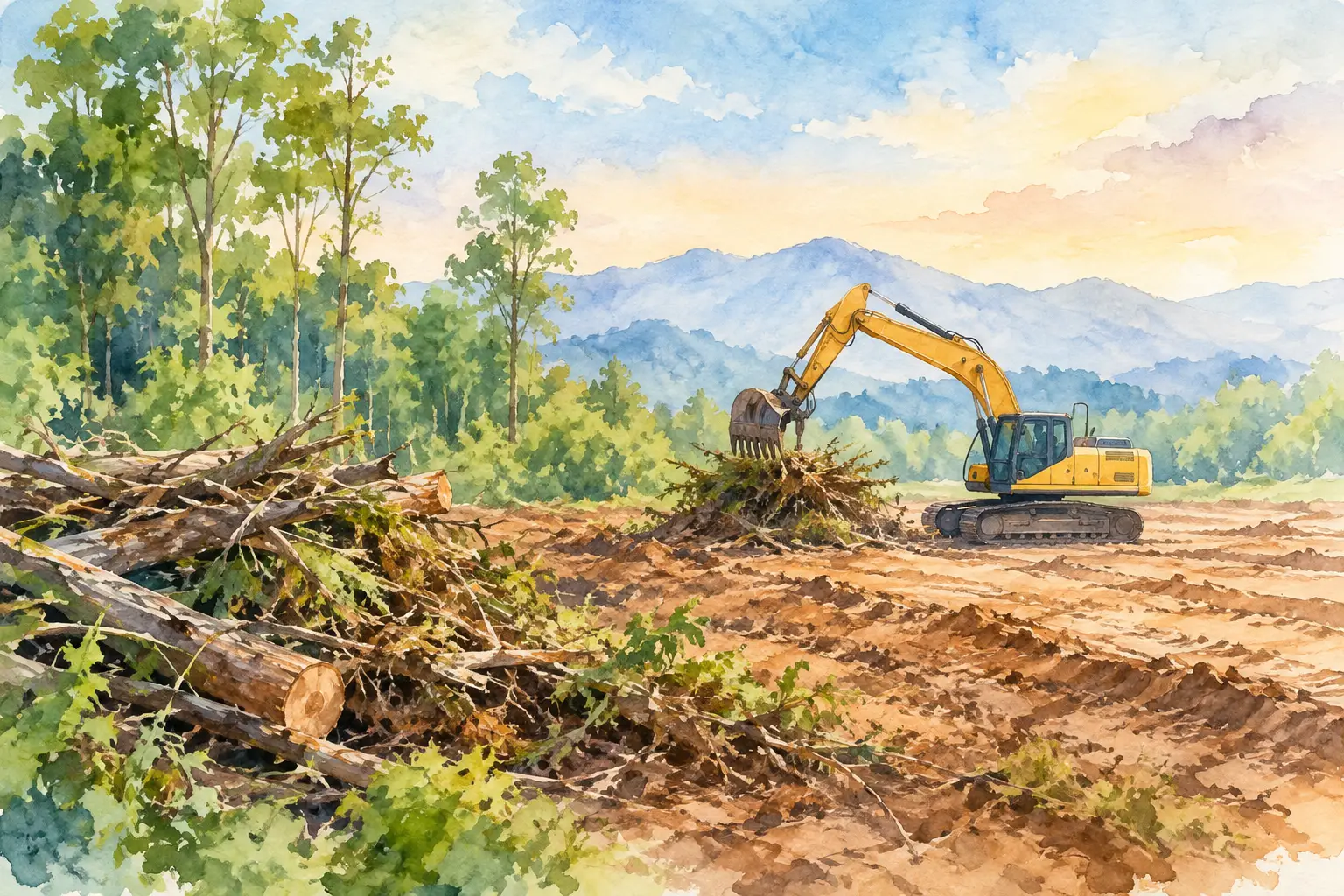
A yard can look manageable until the brush takes over. A fallen limb pile, volunteer trees along the fence, old landscaping timbers, and years of vines can make a property feel smaller, less safe, and harder to enjoy. Land clearing removal is the work of taking out unwanted vegetation, debris, and small obstacles so you can use and care for the space again. The best approach starts with a clear plan, especially when the work involves slopes, large trees, drainage, or utility lines.
For many Mid-Ohio Valley homeowners, the goal is not to strip a lot bare. It is to reclaim a backyard, clean up the edge of a driveway, prepare for a garden, make room for a shed, or reduce the places where pests and overgrowth can gather. Knowing the difference helps you hire the right kind of local help and set a fair price for the job.
What Land Clearing Removal Usually Includes
Land clearing can mean very different things from one property to the next. A light cleanup might involve cutting back brush, pulling vines, gathering storm debris, and hauling away small branches. A larger project may include removing saplings, clearing dense undergrowth, taking out old fence sections, or brush hogging a neglected area.
The important question is not simply, “Can someone clear this?” It is, “What needs to be removed, what should stay, and what has to happen to the material afterward?” A worker can cut brush quickly, but the job is not truly finished if the debris is left blocking a path or piled where it will wash downhill during the next hard rain.
Be specific about the desired result. You may want a clean walking path through a wooded edge, a level-looking yard ready for mowing, or a cleared patch for landscaping. Photos and a short description of the area help nearby workers understand the scope before they respond.
Light clearing versus major site work
Light land clearing is often a good fit for a local worker with the right hand tools, chainsaw experience, trailer, brush hog, or hauling setup. This type of work includes manageable brush, weeds, small limbs, vines, loose yard debris, and young growth.
Major site work is different. Large tree removal, stump grinding, excavation, grading, work near power lines, and projects that could affect drainage or neighboring property may require an insured specialist, heavy equipment, permits, or utility coordination. Do not treat those jobs as a simple yard cleanup. The safer choice may cost more up front, but it can prevent damage, injury, and expensive corrections later.
Start With a Walkaround Before Posting the Job
Before you ask for help, walk the property in daylight and decide what belongs in the cleared area. Mark trees, shrubs, flower beds, fence posts, or landscape features you want protected. If you have a property line question, settle that before anyone starts cutting. A shrub growing near a boundary is not automatically yours to remove.
Look for hazards as you walk. Hidden wire, old metal fencing, glass, holes, steep banks, bees, poison ivy, and fallen limbs under tension can change the nature of the job. Mention these details early. A local worker needs an honest picture to bring appropriate equipment and decide whether the work is within their scope.
It also helps to think through access. Can a pickup and trailer reach the work area? Is there a gate width restriction? Will a worker need to cross a lawn that is soft from recent rain? A little planning protects your grass and keeps a one-day cleanup from turning into a longer project.
Know where the debris will go
Debris removal is often the part homeowners underestimate. Brush takes up more room after it is cut, and wet logs are heavier than they look. Decide whether you want material hauled away, stacked neatly for later pickup, chipped into mulch, or cut into firewood-length pieces. Each choice affects labor, equipment, time, and price.
Burning may seem like the easiest answer, but it is not always allowed or wise. Local rules, weather conditions, fire risk, and the type of material all matter. Never assume a worker will burn debris as part of a clearing job. Ask directly, and check applicable local requirements before making a plan.
Set a Scope That Leads to Better Results
Clear communication gives both the customer and the worker a better shot at a smooth job. Instead of saying, “Clear my backyard,” describe the area, the material, and the finish you expect. For example: clear brush and saplings under four inches wide from the back fence to the creek-side path, leave the two mature maples, stack cut wood by the shed, and haul away vines and loose brush.
If you post a job through Lawns, include several current photos, the approximate dimensions of the space, your preferred timeframe, and whether hauling is needed. Nearby workers can respond with questions or discuss the details in chat before either side commits. That direct conversation matters because it helps avoid a price that only covers cutting when you expected full cleanup and removal.
A good scope should address four practical points:
- What should be cut, pulled, or removed
- What must be left alone or protected
- Whether debris is hauled, stacked, chipped, or otherwise handled
- What the area should look like when the work is complete
You do not need contractor language to be clear. Plain details, good photos, and a realistic description of the property are enough.
Price Land Clearing Removal Fairly
There is no single price for land clearing removal because every yard presents different conditions. Dense thorny brush takes longer than tall grass. A flat, accessible lot is easier than a steep backyard with no vehicle access. Hauling, dump fees, equipment use, and the number of workers needed can also affect the quote.
Be cautious of a very low price that leaves key details unanswered. Does it include cleanup? Is debris removal included? What happens if the visible brush hides an old wire fence or a pile of construction material? A fair arrangement recognizes the actual labor involved while giving you control over the job and budget.
For smaller projects, an hourly rate may make sense when the amount of debris is uncertain. For a clearly defined area with photos and access information, a fixed price can make planning easier. Either way, agree on the scope before work begins. If conditions change, pause and discuss the added work rather than assuming it is included.
Protect Your Property, Neighbors, and Waterways
Clearing changes more than the appearance of a yard. Removing vegetation on a slope can expose soil to erosion. Piling brush near a ditch or creek can create drainage problems. Cutting everything along a property edge can reduce privacy and disturb habitat you may prefer to keep.
A thoughtful plan leaves room for trade-offs. You might clear invasive vines and dead growth while keeping healthy native trees. You might open a view without removing every shrub. On a wet or sloped section, it may be better to clear in stages and maintain ground cover than to leave bare dirt exposed.
Talk with nearby neighbors if access, noise, or a shared boundary may be affected. Most people appreciate a heads-up before chainsaws, trailers, and brush piles arrive next door. It is a small act of consideration that helps a needed property project stay neighborly.
When to call a specialist
Some warning signs should move a project beyond ordinary yard help. Call a qualified professional for trees near electric lines or structures, large dead or leaning trees, deep stumps, major grading, unstable slopes, or suspected buried utilities. If a project involves building, drainage changes, or significant disturbance near a stream or ditch, check local requirements before work starts.
The goal is not to make every clearing job complicated. It is to match the work to the risk. A clean, usable yard is worth doing safely.
Keep the Space Clear After the Big Cleanup
Once an overgrown area is reclaimed, regular attention is much easier than another major clearing project. Mow or trim the edge before young growth becomes woody. Pull vines early. Keep fallen branches gathered after storms. A seasonal yard cleanup can protect the time and money you put into the initial work.
You may also find that the cleared space has a better purpose than you first expected. It could become a dog run, a small garden, a safer route to the shed, or simply an open place for family to spend time outside. Start with the area that is causing the biggest headache, make the finish line clear, and let local hands help you turn it back into part of your home.

