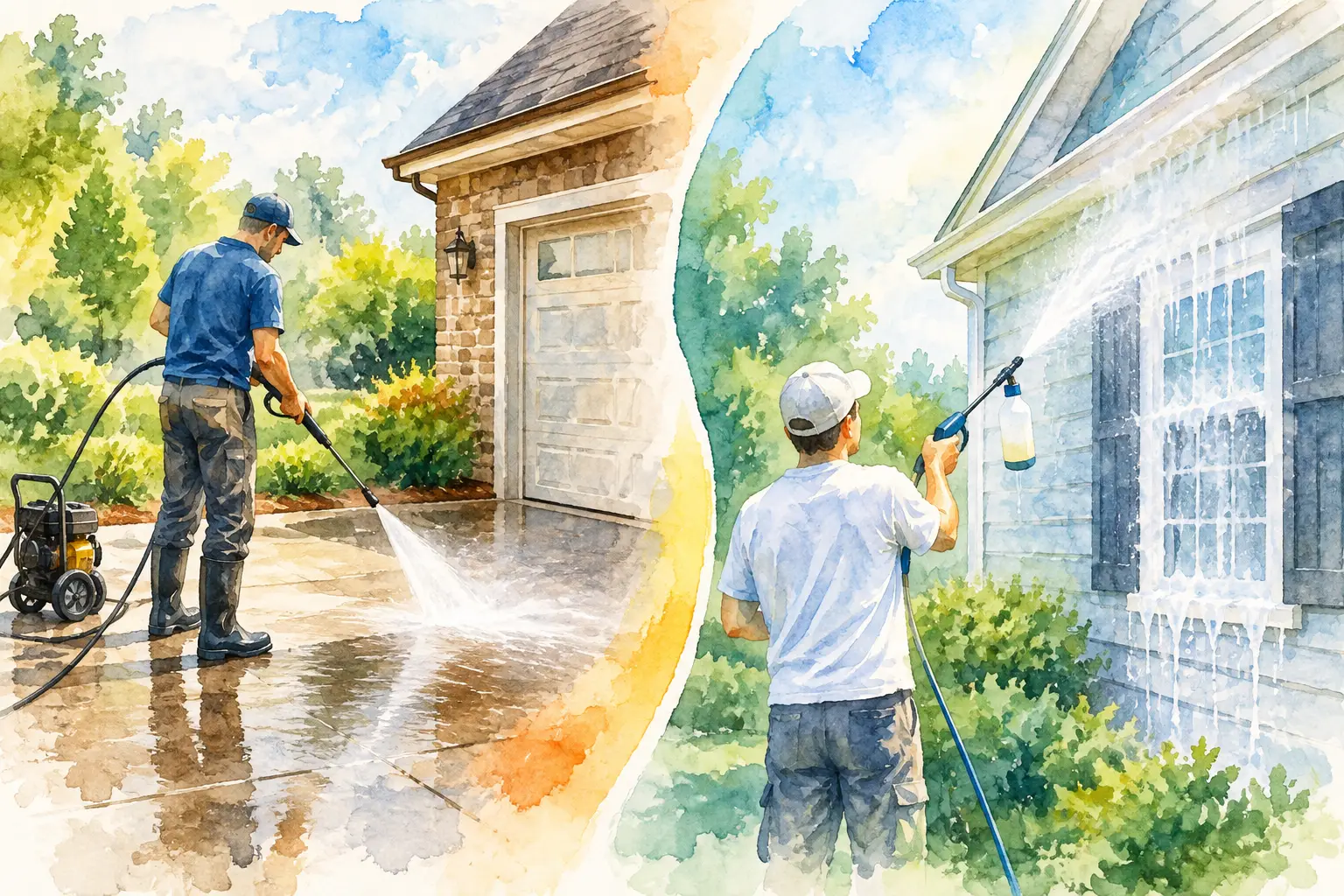
A dark streak on the roof, green film on the siding, and a driveway stained by another Mid-Ohio Valley winter can make the whole property feel overdue for attention. But cleaning it is not as simple as pointing a high-pressure wand at every surface. In the choice between power washing vs soft washing, the right method protects your home while getting rid of the buildup that makes it look worn down.
The wrong method can strip paint, scar wood, force water behind siding, or shorten the life of roofing materials. The right one can brighten a property, improve curb appeal, and help a homeowner stay ahead of the moisture, pollen, algae, and grime common around Parkersburg and the surrounding area.
Power Washing vs Soft Washing: The Main Difference
Power washing uses pressurized water to remove tough, stuck-on debris. Technically, a power washer uses heated water, while a pressure washer uses unheated water. In everyday conversation, though, people often use “power washing” to describe either kind of high-pressure cleaning. The key point is the force of the water hitting the surface.
Soft washing takes a different approach. It uses low-pressure water, usually combined with a surface-appropriate cleaning solution, to break down organic growth and dirt. Instead of blasting stains away, the solution does much of the work. The surface is then rinsed at a pressure closer to that of a strong garden hose than a concrete-cleaning machine.
Neither method is automatically better. Concrete can handle more force than painted siding. A roof should be treated very differently from a patio. Good exterior cleaning starts with the material, the type of staining, and the condition of the surface.
When Power Washing Makes Sense
High-pressure cleaning is a practical choice for hard, durable surfaces with embedded dirt or stains. Driveways, sidewalks, brick patios, stone paths, and some heavy-duty retaining walls are common examples.
Concrete is especially well suited to power washing because its porous surface holds mud, tire marks, road salt residue, mildew, and oily spots. A careful operator can use the right nozzle, pressure setting, and distance to lift grime without leaving visible wand marks. For broad concrete areas, a surface cleaner can also produce a more even result than cleaning one narrow strip at a time.
Power washing can also help with unfinished or weathered decks, but this is where judgment matters. Wood is tougher than it looks until too much pressure raises the grain, leaves lines, or digs out soft spots between boards. A deck that will be cleaned and refinished may need a gentler setting and a wood-safe cleaner rather than maximum pressure.
The same caution applies to brick and mortar. Older brick, loose mortar, and deteriorating masonry may not tolerate aggressive washing. If you can see crumbling joints, flaking surfaces, or previous water damage, it is wise to have the area assessed before scheduling the job.
When Soft Washing Is the Safer Choice
Soft washing is usually the better answer for surfaces where pressure can do more harm than good. That includes roofs, vinyl siding, painted trim, stucco, many fences, screened enclosures, and delicate outdoor fixtures.
Those black roof streaks are often algae, while moss and lichen can take hold in shaded or damp areas. They may be tempting to blast away, but high pressure can loosen shingles, remove protective granules, damage flashing, and push water where it does not belong. A proper soft wash treats the growth and rinses it away without treating the roof like a driveway.
Vinyl siding often looks great after soft washing because its dull appearance is frequently caused by mildew, pollen, spider webs, and airborne grime. High pressure can crack older siding, force water behind panels, or leave oxidation streaks. Soft washing handles the buildup with less risk and gives the cleaning solution time to work.
Painted wood and composite materials also deserve a lighter touch. A low-pressure wash can refresh a porch railing, fence, or trim without stripping a finish that is still in good shape. If paint is already peeling, cleaning may reveal the full extent of the problem, which is useful, but it will not replace the repairs and repainting that follow.
Match the Method to the Stain
The surface is only half of the decision. The cause of the stain matters, too.
Mud, tracked dirt, and road grime often respond well to water pressure on durable surfaces. Organic growth such as algae, mildew, moss, and mold usually needs a cleaning treatment that kills or loosens it first. Otherwise, a hard rinse may remove the visible layer while leaving material behind that returns quickly.
Oil stains on a driveway can be stubborn. Pressure may improve them, but older oil often requires a degreaser and some dwell time. Rust, irrigation stains, and efflorescence – the white mineral residue sometimes found on masonry – each call for a different cleaner. More pressure is not a universal solution.
That is why an experienced local worker should ask what you are seeing, how long it has been there, and what the surface is made of before quoting the work. A few photos can help, but an in-person look is especially useful for roofs, old decks, and large areas with mixed materials.
What Homeowners Should Prepare Before Washing
Exterior cleaning goes more smoothly when the work area is ready. Move patio furniture, planters, grills, toys, and vehicles away from the area. Close windows and doors, and make sure exterior electrical outlets and light fixtures are protected as needed.
Plants deserve special attention during soft washing. Cleaning solutions should be selected and applied carefully, and nearby landscaping should be thoroughly pre-wet and rinsed afterward. Tell the worker about vegetable gardens, newly planted shrubs, ponds, outdoor pets, or anything else that needs extra care.
It also helps to set clear expectations. Are you looking for a full-house wash, a cleaner front walk before guests arrive, or a driveway refresh before putting a property on the market? Point out stains that matter most and ask whether they are likely to come out completely. Some stains improve dramatically but do not disappear, especially if they have been sitting for years.
Questions to Ask Before You Hire Someone
You do not need to know every nozzle size or chemical ratio. You do need enough information to feel confident about the plan. Ask which method is recommended and why. A good answer should connect the method to your specific surfaces instead of offering one blanket approach for every job.
Ask whether the worker has experience with the material you need cleaned, particularly roofing, older siding, wood, or masonry. Discuss how plants and nearby surfaces will be protected, whether you need to provide access to water, and what happens if weather interrupts the work.
Price should be clear as well. The size of the area, degree of buildup, access, water availability, and special stain treatment can all affect the final cost. Getting those details settled before the work begins prevents surprises for everyone.
For homeowners who prefer a simple local option, Lawns lets you post the job details, share photos, set a preferred price, and connect with nearby independent workers through in-app chat. You can describe the surfaces involved so workers can respond with the right approach instead of guessing.
A Seasonal Plan That Keeps Buildup Manageable
Exterior washing is easier when it is part of regular property care rather than an emergency project. Spring is a popular time to clear winter grime from walkways, siding, and patios. Late summer and fall can be useful for removing pollen, cobwebs, and algae before colder, wetter weather settles in.
Still, timing depends on the task. A roof with active moss should not wait simply because it is not on the calendar. A freshly stained deck may need time to cure before any washing. During freezing weather, cleaning concrete can be unsafe if runoff turns to ice.
Look at shaded sides of the house, areas under trees, and spots where gutters overflow. These are the places where organic growth tends to return first. Catching it early usually means a gentler cleaning process, less time on the job, and a better chance of preserving the surface underneath.
A clean driveway or bright siding is satisfying, but the best result is a home that has been cared for thoughtfully. Choose pressure for durable surfaces that truly need force, choose soft washing when materials need a safer touch, and give local workers enough detail to do the job right the first time.

