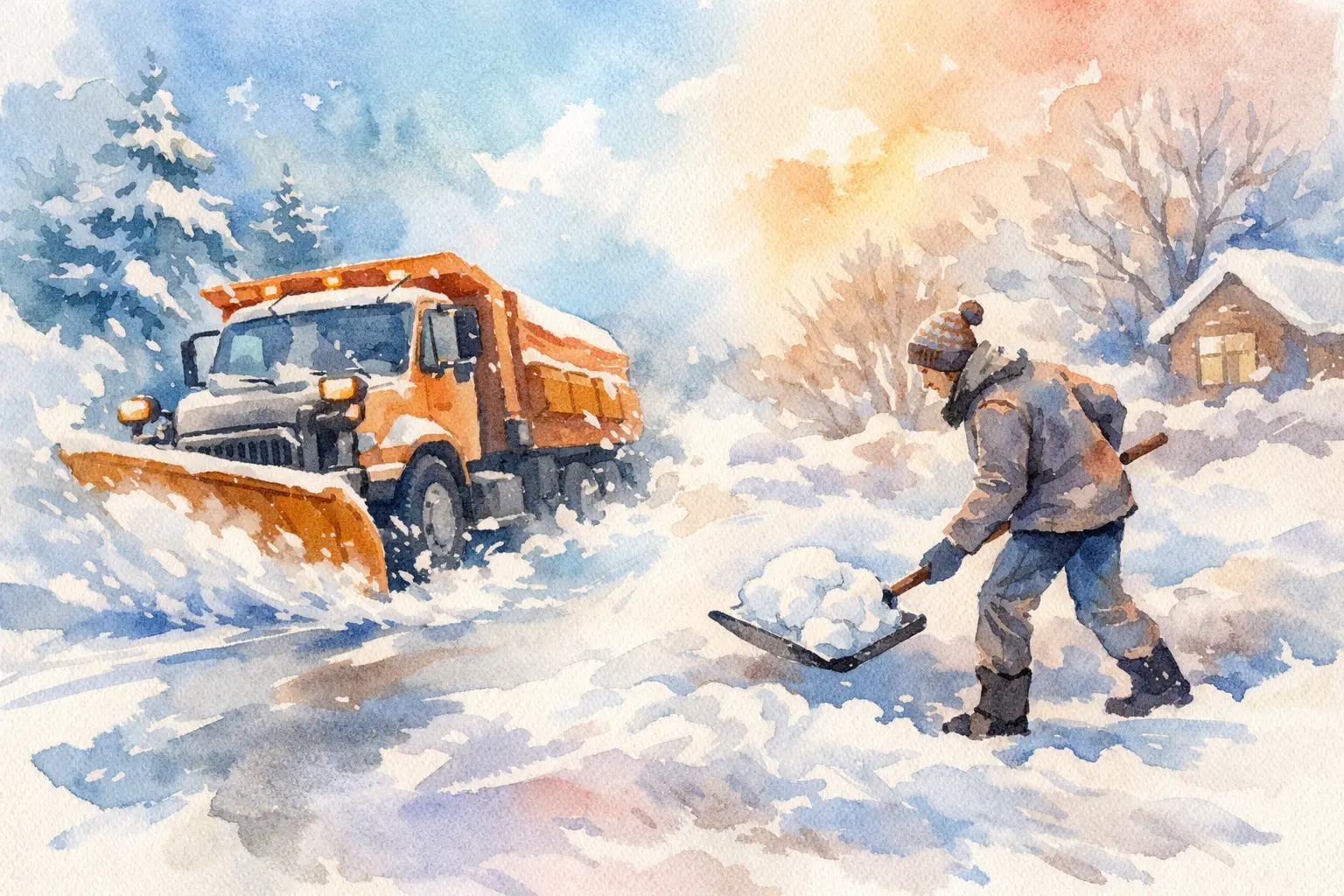
A light dusting on a short sidewalk can be handled before the coffee finishes brewing. A wet, heavy snowfall across a long driveway is a different kind of morning. When weighing snow plow versus shoveling, the better choice is not always about toughness or cost. It is about keeping your home accessible, avoiding injury, and getting the job done before packed snow and ice make it harder.
For many Mid-Ohio Valley households, the best answer changes with the forecast. Shoveling can make sense for a few inches and a small area. A plow or hired snow-removal help becomes more practical when the snow is deep, the driveway is long, time is tight, or physical strain is a concern.
Snow Plow Versus Shoveling: Start With the Job Size
Think beyond the number of inches in the forecast. Snow depth matters, but so do the size and shape of the area you need cleared. A narrow front walk and a two-car driveway are not the same job, even after the same storm.
Shoveling is often a reasonable option for a small sidewalk, porch steps, and a short driveway after a light snowfall. It gives you close control around cars, landscaping, curbs, and entryways. If you are already home, healthy, and able to clear snow in stages, it may be the quickest way to restore a safe path.
Plowing starts to make more sense when a driveway is long, wide, steep, or shared. It is also useful when snowfall is expected to continue for hours. A plow can move a large volume of snow quickly, opening room for vehicles and reducing the amount of lifting someone has to do by hand.
There is one catch: a plow does not replace every bit of hand work. Snow often remains near garage doors, steps, walkways, and the mailbox. A good plan may involve plowing the main drive, then shoveling or using a snow blower for the edges and pedestrian areas.
Cost Is More Than the Price of the Job
At first glance, shoveling looks free if you own a shovel. But the real cost can include your time, physical effort, missed work, and the risk of an injury that puts you out of commission for much longer than one snow day.
A snow plow service costs money, particularly for one-time visits after a storm. Still, it can be worthwhile for households with multiple vehicles, long drives, older residents, busy parents, or people who need to leave early for work or appointments. The value is often in knowing the drive can be cleared without rearranging your entire day.
For renters, the decision may also depend on the lease. Some landlords handle driveways and shared lots, while tenants may be responsible for sidewalks, steps, or private entrances. Check before the first storm so there is no confusion when snow arrives overnight.
If you hire help, be clear about the scope before work begins. Does the price cover the driveway only, or the sidewalks and steps too? Is salting included? Where should the snow be piled? Clear details prevent surprises and help the worker bring the right equipment.
Safety Can Change the Decision Quickly
Snow shoveling is real physical labor, especially when snow is wet. That heavy, slushy snow can weigh far more than the fluffy kind, and lifting it repeatedly can strain the back, shoulders, and heart. Cold air also makes strenuous work harder on the body.
Shovel in smaller passes rather than waiting until snow reaches several inches deep. Push snow when you can instead of lifting it. If you do lift, use your legs, keep the load manageable, and avoid twisting while holding a full shovel. Take breaks before you feel exhausted.
A plow reduces the lifting but creates its own safety considerations. Snow needs a designated place to go. Piling it too close to the road can block sightlines for drivers, cover hydrants, or create a hard ridge at the end of the driveway after the road crew passes. Snow should also stay away from furnace vents, gas meters, and drains where melting and refreezing can cause trouble.
No matter which method you choose, clear a walking path first. A safe route from the door to the car, mailbox, and trash bins matters more than a perfectly clean driveway. Apply salt or another ice-melt product after clearing snow, especially on shaded steps and walkways where refreezing is common.
Timing Matters More Than Most People Think
The easiest snow to remove is snow that has not been packed down. Tires, footprints, and temperature swings turn a manageable layer into slick, stubborn ice. If possible, clear a first pass before people begin coming and going.
During a long storm, shoveling two or three lighter rounds is usually easier than tackling everything at the end. The same is true for a plow: arranging service around snowfall timing can keep the driveway usable instead of letting a deep layer accumulate.
Pay attention to the end of the driveway. Municipal plows often leave a dense mound after clearing the road. It can be frustrating to finish your whole driveway and then find a wall of snow at the street. If you are shoveling, leave that section for last. If you are hiring a worker, ask whether the street-end pile is included in the job.
When Shoveling Is the Better Choice
Shoveling is often the right call when the area is small, the snowfall is light, and you can do it safely. It also works well when you need precision around delicate landscaping, parked vehicles, stairs, or tight spaces a plow cannot reach.
It can be a satisfying way to take care of your own place, too. For a capable homeowner with a good shovel and twenty minutes to spare, there is no need to overcomplicate a simple cleanup. Just do not treat a heavy storm like a routine chore if your body, schedule, or property layout says otherwise.
When a Snow Plow or Local Help Is Worth It
A snow plow is usually the stronger choice for large driveways, repeat storms, deep accumulation, and homes where quick access matters. It can be especially helpful for older adults, anyone recovering from an injury, households with young children, and people who cannot risk being late to work, school, or medical care.
Hiring local help also gives you flexibility when your usual plan falls through. Maybe your snow blower will not start, you are traveling, or a storm arrives while you are working a long shift. A nearby worker can take on the physical part while you focus on getting your household ready for the day.
With Lawns, residents can post a snow-removal or salting job, share the location and timing they need, and connect directly with nearby independent workers. Describe the driveway, stairs, sidewalks, snow depth, and whether you need salt. Photos can also help a worker understand the layout before agreeing to the job. Clear communication helps neighbors do good work for one another.
A Practical Winter Plan for Your Property
The smartest approach is often not choosing one method for the entire season. Keep a sturdy shovel and ice melt on hand for steps, walkways, and quick touch-ups. Then have a plan for larger storms, whether that means using a plow, a snow blower, or arranging local help.
Before winter gets busy, decide where snow can be piled without blocking vehicles, drainage, visibility, or access to your home. Mark the edges of driveways and landscaping with reflective stakes if they tend to disappear under snow. Move portable basketball hoops, planters, and other obstacles before the ground freezes.
Most of all, give yourself permission to choose the option that protects your time and your health. A clear driveway is useful, but a safe path home and a neighborly hand when the weather turns are worth even more.

